


In the Rhythm of Horror – The Abyss of Dances
“In the Rhythm of Horror – The Abyss of Dances” is a collection of six fantasy stories by young Croatian authors. The stories were chosen via a competition that Mala zvona held in 2020, after which authors Josip Čekolj, Mateja Pavlic, Marin Pelaić, Ines Vajzović, Martina Vidaić and Orin Ivan Vrkaš were chosen. Except for the characteristic fantastical elements of the unexpected and wondrous, the motive of dance also connects the stories – a dance of the dead and the arisen, a dance of half-humans and half-animals in the moonlight, an oriental dance of wraiths in black capes. These obnoxious dancers contribute to an uneasy atmosphere but at the same time, they create an aura of mystical beauty. Each story is illustrated with a black and white piece by Klara Rusan Klarxy – her work masterly depicts the merge of the real and the otherworldly, and makes a world that might seem dark and bizarre mysteriously alluring.

Silences
In this book that addresses every generation words and images blend into an impressive poetical unity. Using drawings with simple, clear lines and concise sentences, the author tells a story that’s possible to read and experience on different levels. She talks about the close connection of human beings with nature, about changes and the importance of that – sometimes concealed, but still permanent – relationship. The tree is also a symbol of the author’s inner being, a deep and vital center where her strength arises from, a strength of the utmost importance in encounters with the outside world and collisions with its walls.


Skica za junakinju
Kao pjesnikinja dokazano vješte ruke, Sanja Lovrenčić skicira tajanstvenu junakinju. Tko je ona? Nakon čitanja, na nama je da zaključimo. Ili da je ostavimo da se još dugo oblikuje u nama. Jer ova zbirka pjesama računa na suradnju onoga koji pomno gleda i sluša, znatiželjna čitatelja osjetljiva na jezik i njegov onkraj. Sanja Lovrenčić poziva nas na pustolovno pjesničko putovanje kroz pjesme-epizode jedne posve osobite, nikada dokraja iskazive ili pak oštro iscrtane protagonistice, a s čijim se veseljima, dvojbama, uvidima i rezignacijama s lakoćom suživljavamo. (Dorta Jagić)


Quince
The picture book “Quince” tells a fantastic story about four friends who, during the summer holidays, cross the stream near the village where they live, although it’s forbidden. On the other side, however, they find neither “trolls, nor bogeymen, nor tusk-owners, nor dragon’s nests”; they encounter creatures that are almost the same as humans but live in forest dwellings. One of them, the boy Quince (with the word for apple in his name), will make friends with the four children and will reveal to them the secrets of the forests. The author of the text, Lana Momirski, intertwined a number of motives in this framework story: some of the friends will move to a bigger city after the school holidays, and the central heroine will have to learn to deal with parting; playing with Quince, children will learn to respect nature and all its creatures; the forest world will become a kind of refuge, but also a space from which the problems of reality and personal existence can be seen more clearly. Subtle watercolors, by Ivana Koren Madžarac and Lana Momirski, evoke to the young reader all the liveliness, warmth and diversity of this mysterious forest world.
Book #3342

The Seven Cats
The Seven Cats is a collection of children’s texts by the great Russian avant-garde author Daniil Harms. As Harms worked under hard censorship, these texts form the main part of his oeuvre that was published during his lifetime (most of his “adult” texts were circulating only as manuscripts within underground circles). The Seven Cats encompass various prose miniatures, some longer stories but also children’s poetry. Throughout these various genres one can follow the celebrated absurdist humor of Daniil Harms which is, in these children’s texts, deprived of its cruel elements and becomes a means of transforming the very often glum everyday to an anarchic carnival. The book was illustrated by Vendi Vernić, a prized young Croatian visual artist whose stile corresponds perfectly with the avant-garde but still childish aspects of the literary text.
Book #3379
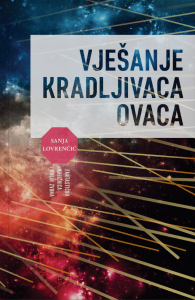
Hanging Sheep-stealers, a novel
In this book of stories – with a subtitle: a novel – the author is playing with the science fiction genre, but hanging sheep-stealers is not a genre literature in the narrower sense of the term. Each of twenty texts of the book has a different narrative structure and is related to some problem of contemporary world, pushing chosen topics to possible or impossible extremes. So the obsession with eternal youth leads to the production of GMO people with a gene of snake, who change their skin every year but lose part of their memories in the process; the sudden loss of rare earth elements causes a major technological drawback; a solution for the recycling of plastic waste is achieved by the creation of copyrighted plastic-eating mutants; the idea of general participation in political power (“five minutes of power to everybody”) manifests itself as a travelling parliament-carousel with eight politically correct entrances; in the defrosted Arctic there is a war going on for the resources made attainable by the global warming etc.
All the stories are connected by the environment, a single imaginary world of not-too-distant future, but each has its separate setting and characters, with their interests, perceptions and – what is especially important – voices. The stories are often told through monologues and dialogues, from a somewhat distorted subjective perspective that constantly leaves open possibilities of another interpretation of things.

Little Dictionary of Biblical Women
Renowed Croatian poet and short story writer Dorta Jagić offers a series of highly original literary portraits of biblical heroines, drawing on material from the biblical narrative, but also from various other sources. The author gives her heroines imagined personal traits, poetic details of hair, face or gait, and more then an occasional hidden thought, connecting them boldly with contemporary world.
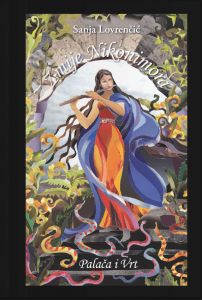
Zmije Nikonimora – Palača i vrt
Fantastični svijet planinskog Nikonimora, južnih obala Yalme i Svardije, carstva Četverolista, sjeverne zemlje Letinen, njene velike rijeke i mističnih običaja, otkriva se u svem svom izobilju kroz živote graditelja Arnea (Agrona) i sviračice Tisye.
U prvom dijelu trilogije “Zmije Nikonimora” Tisya i Arne, zaustavljeni hladnoćom, odvojeni prostorom i polaganom kataklizmom poznatoga svijeta, pokušavaju nazrijeti jedno drugo kroz vode čarobnog jezera i sjećaju se svega što je prethodilo toj teškoj zimi. No svijet oko njih, naročito onaj na sjevernim granicama, ni zimi ne miruje…
Knjigom “Palača i Vrt” autorica uvodi čitatelja u izmišljenu prošlost čiji će mu se prostori i običaji na mahove možda učiniti poznatima…

Rijeka sigurno voli poplavu
“Istančanošću verbalnog tkiva, sjenovitošću pobuđenih slika, hermetičnošću naslućenih značenja, Sanja Lovrenčić ostvarila je izdvojen, apartan literarni prostor, individualni otočić u arhipelagu suvremenoga hrvatskog pisma…
Stanoviti neoromantičarski ton probija iz naizgled klasicistički organizirane sekvence, ali gospodarska distanca možda je najprikladnija maska za artikulaciju prigušenog krika.” (Tonko Maroević)

Stele
Pjesnička zbirka Stele Vicotra Segalena – jedno od klasičnih djela francuskog modernizma – prvi put u integralnom obliku u hrvatskom prijevodu, s novim kaligrafijama i prijevodom kineskih epigrama.

Kuku i Riku
U malenom selu, na malenom imanju, živjela jednom dvojica čupavaca Tonči i Đuro, okruženi domaćim životinjama. Njihov se život odvijao između rada u polju i sviranja raznih instrumenata. Glavni junaci priče, međutim, nisu čupavci nego njihova dva pijetla, blizanci Kuku i Riku, koji nakon idiličnog djetinjstva dospijevaju u ruke beskrupuloznim Burazima… Kuku i Riku morat će tada upotrijebiti svu svoju hrabrost i vještinu kako bi se vratili bezbrižnom kljucanju po seoskom dvorištu.
Book #2903