-
 Out of the Atelier
× 1
Out of the Atelier
× 110,00 €6,00 €
Ukupno : 6,00 €

 Out of the Atelier
Ukupno : 6,00 €
16,00 € 9,60 €
Biography of Ludwig van Beethoven written by his contemporaries.
Format: 13,5×20,5
ISBN: 978-953-8313-15-8
Pages: 170
Binding: paperback
Published: 2020.
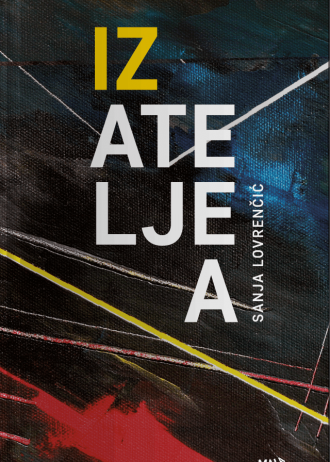
New poetry collection by Sanja Lovrenčić.
still life: frozen begonias
brush captures the moment:
the stem still looks solid
ice in its heart makes it
apparently alive
while the sun is shining fervently
upon deep-frozen world
you see in the background:
someone left open
the veranda door
in the coldest night
malicious master painter in the picture
on a piece of auxiliary something
delivery box perhaps in which arrived
everything that’s crammed in the corner
is painting the rotting the gray the weary
plants as they will be
in only a few hours –
but not yet
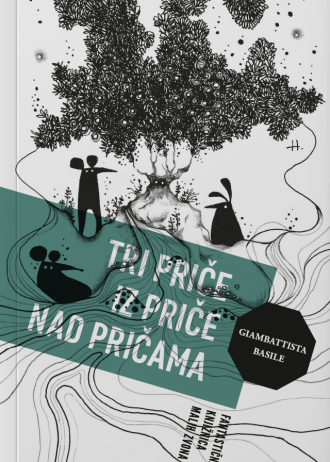
Mala zvona is proud to present the first Croatian translation of a selection of stories from Giambattista Basile’s famousTale of Tales (Lo cunto de li cunti or Il Pentamerone)
Basile’s collection, written in the 17th century in Neapolitan dialect, served as an inspiration to numerous fairy tale writers over the centuries; Basile’s motifs can be traced through many famous collections, such as those written by Perrault or the brothers Grimm.
In these grotesque stories – which are by no means intended for children – Basile teaches the reader about virtue, vice, deception and love while using a flamboyant Baroque rhetoric. Our selection includes the following stories: The Enchanted Doe, The Flea and The Old Woman Who Was Skinned who were also used as a pretext for Matteo Garrone’s multiple award-winning movie Il racconto dei racconti.
Sanja Lovrenčić wrote the book of prose fragments entitled Zagreb Childhood in the Sixties while she was working on the translation of Walter Benjamin’s autobiographical Berlin Childhood around 1900,and her writing is therefore marked by an interesting duality. Zagreb Childhood functions as an autobiographical discourse and deals with the elements typical for that genre: introspection, sketches of the chosen period, a fine nostalgia for childhood, which an adult can reach only as a selection of fragments that can never be made into a coherent whole; those elements could be labelled as personal and local. On the other hand, however, the book is a response to a literary text, a reaction not to a childhood or a social change, but to a certain type of writing. This leads to a completely different set of ideas, that we might call inherently literary – intertextuality, the fictionalization of the self, the use of poetic language and lyrical fragments that simultaneously connote and transcend personal experience. Thus Zagreb Childhood combines two elements that are necessary to make a quality literature: inclusion in the local context, as well as its constant dissolution – both intimacy and universality.
Jana Prević Finderle’s “Herbarium” could both be seen as a follow-up to her debut “The travertine bridge”, published in 2019, and its sheer opposite. One could argue that it’s a follow-up, because it is a book of short prose inspired by the author’s own experiences, delivered in a simple and direct way – and that it’s an opposite, as “The travertine bridge” was dedicated to travels and encounters, a horizontal motion through space, while “Herbarium”, a book about the lives of plants and the people closest to the author, focuses on travelling vertically, through time. For every herbarium, including Jana’s, is a book of memories. It seems that we live in times of increased sensitivity for the green world that surrounds us, a world that is getting more endangered with every day. But Jana’s soft spot for plantlife isn’t a result of any trend, although the need to create a herbarium made of words could have been influenced by the increasing eco-awareness in times of global warming. This author has, since early childhood, been living her life in close connection to plantlife, which enables her to talk about it from a personal, almost lyrical, perspective. Her authentic language depicts a simple closeness. The focus doesn’t lie on a problem or on the author’s knowledge of botany – which she clearly has – but rather on her personal experiences, her discoveries, little miracles she encounters, like the ones where her aunt Mirjana, in Jana’s adolescent days of spleen, tells her about an acorn and an oak.