-
 Herbarium – Stories of Plants
11,00 € × 1
Herbarium – Stories of Plants
11,00 € × 1
Ukupno : 11,00 €

 Herbarium – Stories of Plants
11,00 € × 1
Herbarium – Stories of Plants
11,00 € × 1 Ukupno : 11,00 €
16,00 €
Biography of Ludwig van Beethoven written by his contemporaries.
Format: 13,5×20,5
ISBN: 978-953-8313-15-8
Pages: 170
Binding: paperback
Published: 2020.
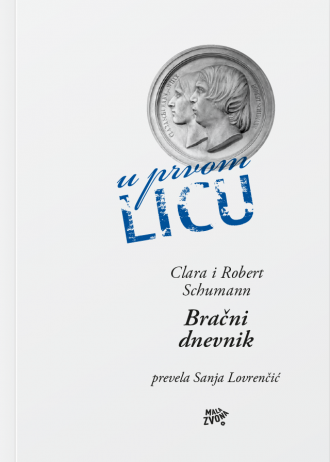
The edition that will thrill every classical music lover! The year is 1840, in the city of Leipzig; the young but already internationally famous pianist Clara Wieck and the still quite unknown composer Robert Schumann just succeeded in getting married, despite various obstacles. The day after the wedding, upon Robert’s whish, they start writing down all their needs and desires, joys and sorrows of matrimonial life. They take turns in writing, each of them covering the events of one week, at first with a lot of passion. Many celebrated musicians of the period pass through the pages of their double diary; Robert and Clara speak about art, home concerts, days and weeks filled with music, but they also speak about love. In these first years of their marriage, years that have been among the most productive for Robert and a sort of setback for Clara, life is good, but it isn’t without its’ own shadows…
Jana Prević Finderle’s “Herbarium” could both be seen as a follow-up to her debut “The travertine bridge”, published in 2019, and its sheer opposite. One could argue that it’s a follow-up, because it is a book of short prose inspired by the author’s own experiences, delivered in a simple and direct way – and that it’s an opposite, as “The travertine bridge” was dedicated to travels and encounters, a horizontal motion through space, while “Herbarium”, a book about the lives of plants and the people closest to the author, focuses on travelling vertically, through time. For every herbarium, including Jana’s, is a book of memories. It seems that we live in times of increased sensitivity for the green world that surrounds us, a world that is getting more endangered with every day. But Jana’s soft spot for plantlife isn’t a result of any trend, although the need to create a herbarium made of words could have been influenced by the increasing eco-awareness in times of global warming. This author has, since early childhood, been living her life in close connection to plantlife, which enables her to talk about it from a personal, almost lyrical, perspective. Her authentic language depicts a simple closeness. The focus doesn’t lie on a problem or on the author’s knowledge of botany – which she clearly has – but rather on her personal experiences, her discoveries, little miracles she encounters, like the ones where her aunt Mirjana, in Jana’s adolescent days of spleen, tells her about an acorn and an oak.
The text of these Notes flows like a mountain stream or breeze: it describes scenes from writers’ residences in which the author stayed for a little over a year, and the reflections associated with these places make up the bulk of the book. These are notes about the journey, woven with the subtle skill of a top connoisseur of language and working with words. Atmosphere, associations and images are innumerable; thoughts, questions – we recognize them all, we ask ourselves all that. But here and there, as when the folds of a fabric are separated by a gust of wind, readers see that this is not all: from the notes made between the trips they catch hints of the horizon of harsh and stupid reality that led the author to go on the road again and again. “You cover reality with a veil and you see better,” she writes in this book. Traveling with clear thoughts and open eyes, Sanja Lovrenčić covers and reveals reality with a unique fabric woven of words. (Iva Valentić, ed.)
In this book that addresses every generation words and images blend into an impressive poetical unity. Using drawings with simple, clear lines and concise sentences, the author tells a story that’s possible to read and experience on different levels. She talks about the close connection of human beings with nature, about changes and the importance of that – sometimes concealed, but still permanent – relationship. The tree is also a symbol of the author’s inner being, a deep and vital center where her strength arises from, a strength of the utmost importance in encounters with the outside world and collisions with its walls.