• 0 Knjige - 0,00 
    • Košarica je prazna.

Fantastična knjižnica Malih zvona

The End of a Long Journey

13,00  7,80 

In this short novel Michael Ende takes us for a journey across Europe, Asia, Africa, all the way to Hindukush. The story’s protagonist, Cyril Abercomby is an English aristocrat and the son of a 19th century diplomat. In his childhood he follows his father on diplomatic missions and when the father dies, Cyril inherits the family fortune and continues wandering across the globe in a pointless spleen. Although he had been enjoying the luxury of grand hotels and high society ever since his earliest childhood, Cyril is haunted for life by a feeling of non-belonging, of homelessness. But then one day, he finds his home – on a painting. Suddenly his voyages become purposeful: he must find the place depicted on the canvas, no matter the costs. This quest leads him to different atrocities and a final, suicidal, mission: neither dead, nor alive, Cyril finds his home in the space of his own imagination grafted upon a real geographical place. Michael Ende thus develops a dark, but lyrical story on alienation, the power of imagination and the workings of art. His text has been illustrated by the painter Dominik Vuković who visually represented the dark contours of this story that revolves around a painting.


Book #3363

Three Tales from The Tale of Tales

10,00  6,00 

Mala zvona is proud to present the first Croatian translation of a selection of stories from Giambattista Basile’s famousTale of Tales (Lo cunto de li cunti or Il Pentamerone)

Basile’s collection, written in the 17th century in Neapolitan dialect, served as an inspiration to numerous fairy tale writers over the centuries; Basile’s motifs can be traced through many famous collections, such as those written by Perrault or the brothers Grimm.

In these grotesque stories – which are by no means intended for children – Basile teaches the reader about virtue, vice, deception and love while using a flamboyant Baroque rhetoric. Our selection includes the following stories: The Enchanted DoeThe Flea and The Old Woman Who Was Skinned who were also used as a pretext for Matteo Garrone’s multiple award-winning movie Il racconto dei racconti.


Entrepreneurs

10,00  6,00 

The short novel Entrepreneurs by Mathias Nawrat, one of the most interesting voices of the new generation of German writers, can be situated into the dystopian tradition of the science-fiction genre with elements of social criticism. The story is happening in a well-known world, labeled by the geographical toponym Schwarzwald; however, this world underwent a certain kind of apocalypse – about which nothing is said explicitly, but we guess it had something to do with nuclear power – and the rules of an advanced technocratic society do not function any more, although they are not totally suspended. Through this fragmentary world, where nature, technology and waste interlace and form grotesque figures, roams the protagonist and narrator Lipa, a thirteen-year old girl. With her father and brother she collects different kinds of toxic leftovers while calling this activity entrepreneurship. The life of her family, in unstable balance on the edge of poverty and danger, is approaching the inevitable catastrophe.

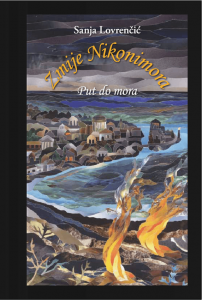
The Snakes of Nikonimor, Part II – The Way to the Sea

11,00  6,60 

In the second part of the trilogy by Sanja Lovrenčić the separated lovers Tisya and Arne travel and go through various ordeals.

Tisya is consciously trying to reach the sea, the White Town, the only place from where the ships still sail to the North. But her journey is long, leading her through the wilderness of the Dividing Chain, where she sees, for the first time, Those-Who-Yell-Together. With the help of the salt trader Margan she arrives in the Stone Cells, where she has some strange experiences and then travels on, further down the Yalma coast, where fires of danger are already burning…

At the same time Arne is with the remnants of the northern army of King Gurna, struggling through dangerous underground paths, where the mirror-people Vodjani lurk with their mirages; he does not know that at the end of this road another shore awaits him…

Poduzetnici

12,00  7,20 

Kratki roman Poduzetnici njemačkog pisca mlađe generacije Mathiasa Nawrata sadrži sve elemente potrebne da ga se upiše u distopijsku tradiciju znanstveno-fantastičnog žanra s elementima društvene kritike. Radnja ovog romana odvija se u nama poznatom svijetu koji je obilježen stvarnim toponimima Schwarzwalda, no taj je svijet pretrpio neku vrstu apokalipse – o kojoj se nikada eksplicitno ne progovara – te u njemu pravila društvenog ustroja uznapredovale tehnološke civilizacije više ne vrijede ali nisu niti potpuno suspendirana. Fragmentiranim prostorom Schwartzwalda unutar kojeg se tehnologija, otpad i priroda isprepliću tvoreći groteskne figure, kreće se protagonistica i pripovjedačica, trinaestogodišnja Lipa. Ona sa svojim ocem i bratom skuplja različite toksične otpatke zaostale nakon industrijskog kraha te ovu svoju djelatnost naziva poduzetništvom. Uz obiteljsku mrežu likova važnu simboličku ulogu igra Dugi Nosonja Timo, Lipin (potencijalni) dečko koji mašta o utopijskom prostoru s one strane Schwartzwalda, kamo na kraju i odlazi. Drugi utopijski prostor koji se u romanu spominje jest topos Novog Zelanda na koji će Lipa otići kad Poduzeće zaradi dovoljan kapital. Nijedno od ovih utopijskih “drugdje” ne realizira se, međutim, tijekom romana.

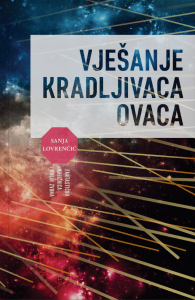
Vješanje kradljivaca ovaca

11,00  6,60 
Roman Sanje Lovrenčić “Vješanje kradljivaca ovaca” nudi čitatelju izazovan hibrid. Smještajući radnju u neodređenu ali blisku budućnost, on propituje neke od akutnih problema sadašnjice: koje su moguće konsekvence reklamiranja, gomilanja smeća, društvene polarizacije, narcisističkog društva, genetskih eksperimenata, manipulacije vremenom. Istodobno, tekst funkcionira kao niz pojedinačnih epizoda, pisanih vrlo često u prvom licu, gotovo ispovjednim tonom, u kojima se uz navedene „velike teme“ uvijek pojavljuju i intimniji sadržaji – ljubav, nošenje sa starošću, smrću, pokušaj profiliranja vlastitih uvjerenja u okolnostima u kojima sam koncept uvjerenja postaje neodrživ te propitivanje etičkih pozicija.

Balansirajući neprekidno između općeg i pojedinačnog, javnog i intimnog, stvarnosti bliskog i fantazmagoričnog, žanrovski-popularnog i hermetičnog, Vješanje kradljivaca ovaca uvlači čitatelje u jedinstven prostor i problematiku, te i oni sami postaju sudionici u njegovom znanstveno-fantastičnom heterokozmosu koji uvijek poziva na osobnu odgovornost.