• 0 Knjige - 0,00 €
    • Košarica je prazna.

The Little Key

17,00 €

Starting from a banal event – a shoe that was untied and a key found on the street – the little heroine of this picture book talks about her loved ones. For each of them, such a key could serve something, unlock something of theirs: mom’s glass showcase, dad’s mysterious drawer, a compartment with love letters in grandma’s cabinet, a friend’s special pencil case, her brother’s box with figurines of dragons and knights. With each contemplation of the key, an image from everyday life is “unlocked”. But in the end, the girl concludes that the key will best serve her and her own imagination.
The author of this story about curiosity is the acclaimed and experienced writer Sanja Lovrenčić, and the book was illustrated by Lucija Mrzljak, an award-winning artist educated in Zagreb, Prague, Krakow and Tallinn.

Meandering with Julije Knifer

18,00 €

“Whenever I find something that I like, I want to tell a story about it” , says the narrator of this book. But she will by no means tell the story of Julije Knifer and his famous meander motif alone. The painter himself talks about anti-paintings and anti-bulbs, about the rhythms of black and white, vertical and horizontal lines, research and the search for extremes – all of this in his own words taken from original diary entries. And the illustrations inspired by his art also tell the readers about his journey towards and with meanders in their own way. In the fifth picture book of their Croatian fine art series, Sanja Lovrenčić and Dominik Vuković present the work of one of the most original and respected Croatian artists of the twentieth century, well-recognized abroad.

Notes from Encountered Lands

17,00 €

Miroslav Kirin’s book of travelogues brings together notes from different periods of the author’s life, but thanks to the coherence of his view and characteristic stylistic refinement, makes an organic whole. You could call it a kind of triptych: it starts with notes from Paris in 2005, the middle and most complex part is dedicated to the author’s sojourns in China, and the book ends with very short notes from various trips through Croatia. The author’s observations move in a wide range: from very simple everyday little things that catch his eye to the broad cultural issues of the Far East. Despite the variety of motives seen in the “encountered lands”, the traveler’s eye shows the same curiosity and the same clarity. The moments he records often turn into micro-stories, and out of the multitude of human outlines that appear in his notes and notebooks, some gain fullness and turn into impressive characters. Poetry runs through Kirin’s notes as a kind of weft – sometimes as initiator of travel, sometimes as an object of work and thought, sometimes as a latent awareness of the poetic values of language. Therefore, this book can give pleasure to both travel lovers and to all those who enjoy good literature.

Ema is Alone

16,00 €

The story about Ema – written by Vanja Marković, an expert in inclusive and social pedagogy – deals with an important topic of our time: the way people perceive each other. Roaming the streets of her hometown, the little heroine is trying to find someone to play with. She encounters a whole bunch of various characters, but they notice only her looks – her shaggy hair, her huge eyes, her dirty jacket. They all nag her and none of them wants to follow her imagination, but her ideas for games remain on pages, as possibilities for readers themselves to develop. In the end even Ema repeats the pattern that surrounds her: when a yellow cat asks her to play with it she refuses the invitation, thinking that a black cat would be much more interesting. In a playful way the story opens the readers’ eyes to the wrongs implied in superficial ways of looking at others. The storyteller’s style is simple and flowing, very well adapted to the target group of readers (6-8). The illustrations by Vibor Juhas complement and enrich the text; they are close to the aesthetics of comic books and full of little visual surprises.

Forgotten Things

17,00 €

In her second artist’s book, Agata Lučić takes readers of all generations to a flea market – an almost monochromatic blue world filled with various objects. Each thing there carries traces of time spent in someone’s life, traces of somebody’s past. The young visual artist evokes fragments of life that “forgotten things” shared with their humans in her original, very recognizable style, gradually creating a warm atmosphere – with bits of magic. The last double-page holds a surprise: as the objects manage to attract new owners and are being accepted along with their stories, various colors enter the world of the picture book. It is no longer a space of memories; it becomes a living space. “Forgotten Things” are both nostalgic and cheerful, they urge the reader to open up to hidden histories of unknown people and certain values accessible only to a watchful eye; they invite both children and adults to dream, offering a world of peculiar visual pleasure. 

We acquire and discard things too easily, warns the author of this gentle and playful picture book; but even when they have already been discarded, left to their fate on the stands of some open-air “mini market”, they can be looked at, singled out from the crowd, appropriated, restored, and brought back to life.


Book #4909

Sketching out a Heroine

12,00 €

As a poet of proven skills, Sanja Lovrenčić sketches a mysterious heroine. Who is she? After reading, it is up to us to conclude. Or to let her continue to take shape within us for a long time. For, this collection of poems counts on the cooperation of a careful watcher and listener, a curious reader sensitive to language and its beyond. Sanja Lovrenčić invites us on an adventurous poetic journey through the poems/episodes of a very special, never fully expressible or sharply drawn protagonist, with whose joys, doubts, insights and resignations we easily empathise. (Dorta Jagić, ed.)

Longlisted for the Kamov Award 2021

Serna and Mack in Pursuit of the Frightened Month

15,00 €

In his first prose text the young author uses patterns of traditional storytelling to speak about the contemporary problem of climate change. January disappeared, frightened by the absence of winter; a girl and a household spirit set off on a journey through the world of calendar, trying to find him and persuade him to come back. Adroitly following the spirit of the text, the illustrator uses elements from traditional book illustration, blending them with modern technique and expression.


Book #3348

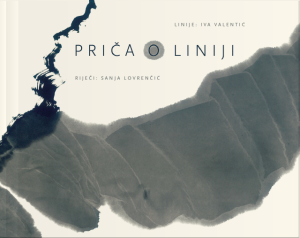
The Story of a Line

18,00 €

In the land of lines, a new one is born — as a dot. And immediately, it begins to move, for without movement, there is no line. As with any beginning, questions arise: Where to? Which way? How? There are many possibilities to explore, many examples to follow — or perhaps not? The young line will move this way and that before discovering its own rhythm, unfolding in space, and finally declaring: THIS IS ME!

Iva Valentić learned about lines in both the West and the East, studying at art academies in Venice and Beijing. The brushstroke on paper — ever-changing, diverse, surprising, and alive — is her primary means of artistic expression. Sanja Lovrenčić has added a few words to Iva’s visual story of the line, acting like signposts along the way. Together, they have created an original picture book—intended for all generations — a highly subtle book about learning, growth, exploration, and freedom.

A Happy Day in Our Neighbourhood

18,00 €

The new picture book by Sanja Lovrenčić and Dominik Vuković follows the journey of a single rose. Passing from hand to hand, the red flower outlines the life of a city neighbourhood through which it is carried by various characters. The neighbourhood is a rich microworld in which chance encounters, small daily rituals and never-ending human dramas take place. The characters that the rose travels among belong to different social groups: from dog walkers, young parents, a shop assistant, a resident of a nursing home and a young artist, to marginalized people such as an elderly homeless man and a street musician. All of them, however, are connected by a simple gesture of kindness: passing the rose from one hand to another. The rose thus becomes a metaphor for the community that permeates the fabric of the city, despite the ever-present differences. Ultimately, this tender flower symbolizes the fragility of every gentle gesture – but also its beauty.

Goat-Foot

15,00 €

This story about a fairy is inspired by real-life experience. Its author Mirjana Mrkela speaks about loneliness and feelings of rejection, common in the lives of people who seem different from the majority. As a person who lost her sight in adulthood, the author easily sympathizes with people who are rejected or marginalized in our society for whatever reason. She tells her story as a fairy tale, drawing on certain elements from Slavic mythology. Her heroine, a fairy who, having stepped into the realm of some kind of evil old magic, becomes a goat, retreats from people who do not accept her. She hides in a mountain world of plants and animals and grieves there. But the moon and the sun are there for her, as well as for all other beings. The moon encourages her with its shine, and the sun makes her strong and calm. The pale fairy represents all those who long for understanding and acceptance. The author created the picture book in close collaboration with Katarina Radošević Galić, a Croatian illustrator and scenographer.

The Door I Do Not Know How to Open

17,00 €

There is a door that we don’t know how to open. Behind them lies the solution to the riddle, the beginning-and-end. This door leading to afterlife or to the void, are constantly present in some way in the ninth poetry book of the noted Croatian author Marija Lamot. But there are also numerous smaller doors that open wide in her poems – doors leading to memories, landscapes, mirrors, moments scattered in time, flashes of an intense present. They lead into the night, into bright light, into a classroom where philosophy is discussed, into family spaces and, above all, to trees and other beings that do not speak in human voices.

Point Nemo

14,00 €

Mladen Kopjar is an author with extensive experience in writing different types of literary texts. In “Point Nemo”, his first collection of poetry, this experience is reflected in the ease and skill with which he builds his poetic world, as well as in his thoughtful and consistent poetics. The origins of the poems are usually in everyday life, its spaces, objects, small events, memories, but thanks to the gift of observation and skillful selection of details, the author skillfully avoids the superficiality and banality of “realistic” writing. Freedom and imagination lead him from concrete experience to surreal images in which personal associations are mixed with various fragments from the ubiquitous virtual space. But the unique tone of this collection stems from the deep emotionality with which the whole is imbued; the author addresses (or talks about) his loved ones: wife, child, parents, meandering through areas of tenderness and pain. In that intimate space, the outside world is mirrored in flashes; the original clash between an authentically, intensely internal world and a diverse, sometimes aggressive external world gives this poetry strength and interest.

The Creepy House

16,00 €

The Creepy House is a skilful blend of a story about a family intending to move from the city to an old house surrounded by nature, an old-fashioned game of riddles, and fairy-tale elements that lend the whole book an air of fantasy that children find so irresistible. Solving the riddles given to them by the mysterious voice from the fireplace, Florijan and Klara explore the house and the garden, noticing so many things they did not see at first. With a bit of fear and lots of laughter, they experience a real adventure in search of a key they will use to ‘unlock’ the magic of their future home… The author shows a very good understanding of a child’s way of thinking and combines an imaginative plot with a subtle educational element about the world of plants and animals. The illustrator follows the story closely, complementing it with a number of small artistic surprises.

Monsters

15,00 €

Lili loves colours. Everything around her is always colourful. Her room, her drawings, her clothes, her thoughts. Until one Monday, when Lili loses in a race and nothing can help her feel better. One by one, monsters come and steal colours out of her life, leaving her in a sombre world as she deals with disappointment and sadness. But Lili will find out that, even though it does not always seem so, colours have a way of finding their way back into our lives – with a little help from our friends. An important story told in a simple yet effective way, with gorgeous illustrations by award-winning artist Klasja Habjan.

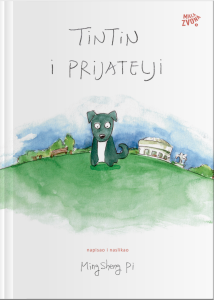
Tintin and his Friends

17,00 €

A basket for mushroom picking, a blanket, and a little black dog – that’s how this story begins. Even though he was abandoned in the forest, the little dog was lucky: he was adopted by two nice people. “Tintin and his Friends” is a diary of the first year they spent together, recorded mainly from the dog’s perspective. We see various little events, from their life at home to from their walks in the park, feeling the warmth the three of them share and following Tintin’s adventures with various dog-friends. In a multitude of small scenes Mingsheng Pi – a Chinese painter based in Zagreb and Tintin’s owner – tells, almost without words, a gentle and cheerful story about animals and people, showing an exceptional talent to spot details and, with just a few strokes of his brush, to evoke a space, an atmosphere, characters, and their relations. Readers of all ages will enjoy Tintin’s adventures, and the youngest among them will learn something new about dogs and their humans – like the importance a dog may have for a with hearing-impaired person.

Dormitory

14,00 €

Although it could seem that the primary origin of this poetry is the world of words – the author recurrently affirms the experience of reading as something very much alive and inspiring – the contact with her own material environment is equally important for Lidija Dujić. And no matter how linguistically complex, surprising, metaphorical this poetry is, and how far it takes (ironic) distance from reality, it always remains tied to the real moment that triggered poetic imagination and caused poetic language to flow. Singling out some moments, turning flashes of reality into a thoughtful linguistic structure, the poet creates original and meditative images, with a clear awareness of poetry as non-ordinary speech.