• 0 Knjige - 0,00 €
    • Košarica je prazna.

Cats

12,00 €

In Cats, the author offers several connected tales: a brave cat Mortimer goes to the sea to see the great white shark (meeting on his way the dangerous mister Darkly); a company of wandering acrobat-cats falls apart because of a very strange problem; Zigfrid and Zelda, brother and sister, practice the skills of measuring and sewing in their own way; and cat chefs, Leonard and Edgar are making pancakes for all of them.


Age: 4-6

Chet Baker on the Beach

17,00 €

In the new poetry book by the acclaimed and award-winning Croatian poet Ivan Babić, “Chet Baker on the Beach”, the readers will notice, on the one hand, the maturity, clarity of concept and stylistic certainty of this experienced writer, and on the other hand his talent for a short form that unites the lyrical and the meditative, and within which the author manages to transform elements of sensory, organic reality into imaginative metaphor. The dominant thematic framework of these subtle poems is love. The foreboding of opening up to another person, the fragility of closeness, unrest, hope and absence alternate like musical variations in a book that is, as the title already testifies, inspired and imbued with music. Music is, however, most present in the poems of the central, titular cycle, where it appears in a multiple role – as an incentive for language, as a possibility of dialogue across the barriers that separate different artistic disciplines, as an embodiment of psychological states and moods. Breath and respiration run through the manuscript as an organic link between music and song, but also as the presence of the living world of nature for which the author shows a special sensitivity (noted in his previous collections). Babić’s sense of language is manifested in lexical abundance, a flexible sentence that manages to remain light despite its complexity, an imaginative but unobtrusive creation of neologisms, and the ability to create a small, concise and rounded whole with well-chosen words.

Croatian Folktales

17,00 €

After reading old Croatian folktales in a very serious book for adults,author Sanja Lovrenčić decided to set her favourite ones free and make them more accessible to children of today, telling them in her own literary voice, adjusting them slightly so that they would be more understandable. In eleven short tales, we meet a wide range of interesting heroes and antiheroes, from fox brides and tiny fairies to ravenous young women and mean bunnies. Set in magical and mystical forest settings skillfully depicted by Branka Hollingsworth, these tales – sometimes whimsy, sometimes not – now get to live on in the minds and hearts of new generations of young readers and listeners, saved from the terrible destiny of being forgotten.

Darklets

15,00 €

In this picture book Croatian author Igor Rajki, winner of the prestigious Grigor Vitez award and the award of the Fairy tale festival of Ogulin, deals with a contemporary issue – the issue of the excessive presence of electronic devices and their screens in our everyday life. He does this in an original way, using his distinctive imaginative poetic language, kindling the readers’ imagination and making them think at the same time. The narrator of the story is giving, as if he were a professor of some kind, a lesson about ‘assembling of darkness in the dark’ – an enchanting phenomenon that occurs at the end of the day, in closed spaces, when darkness begins to descend from the ceiling and rise from the floor; the two darknesses embrace each other and slowly turn into the thick dark. But that is not all; during their game they create small sprouts, so called darklets. Darklets playfully twirl around objects, taming their shapes and leaving no trace. But when various screens start to interfere, a problem occurs: grayish shadows appear where darklets should be… The literary story about darklets is narrated in another, visual language by Klasja Habjan, a young illustrator and designer. She creates impressive, secretive life in spaces on the edge between night and day, spaces inhabited by fleeting human and animal figures, fragments of objects and fragments of their interactions; she does this with extraordinary inventiveness, on a very high aesthetic level, making this book attractive not only for reading but also for (repeated) viewing. By offering the youngest readers an utterly unusual visual experience, Klasja Habjan broadens the concept of what a picture book can be, and opens up the space of children’s book for new ways of artistic expression.

Darkville

17,00 €

Addressing the children for the first time, the renowned Darkville, the setting and the main character of this picture book written by a distinguished author Iva Bezinović-Haydon, is a sad town: all plants are being systematically cut there. No one really knows whose idea that was, but two city officials play a significant role in its implementation. One of them stamps the word ‘NO’ on all requests for a change, the other maintains order with his cutting tools – until a little blue flower emerges from a crack in the asphalt and everything starts to change… Using simple words and an appealing plot, the author talks about the need humans feel for the living green world, for colors, diversity and freedom, but also about different ways of standing up to bad rules imposed from somewhere above – it can be done in a hidden manner, in private spaces, or openly, in public, joining forces with other people. The young illustrator Laura Martinović brought the story about Darkville to life with her playful and warm illustrations, full of creative visual ideas and details that enrich the text.   

Deceptions and Spectres

16,00 €
Book #3399

Dormitory

14,00 €

Although it could seem that the primary origin of this poetry is the world of words – the author recurrently affirms the experience of reading as something very much alive and inspiring – the contact with her own material environment is equally important for Lidija Dujić. And no matter how linguistically complex, surprising, metaphorical this poetry is, and how far it takes (ironic) distance from reality, it always remains tied to the real moment that triggered poetic imagination and caused poetic language to flow. Singling out some moments, turning flashes of reality into a thoughtful linguistic structure, the poet creates original and meditative images, with a clear awareness of poetry as non-ordinary speech.

Ema is Alone

16,00 €

The story about Ema – written by Vanja Marković, an expert in inclusive and social pedagogy – deals with an important topic of our time: the way people perceive each other. Roaming the streets of her hometown, the little heroine is trying to find someone to play with. She encounters a whole bunch of various characters, but they notice only her looks – her shaggy hair, her huge eyes, her dirty jacket. They all nag her and none of them wants to follow her imagination, but her ideas for games remain on pages, as possibilities for readers themselves to develop. In the end even Ema repeats the pattern that surrounds her: when a yellow cat asks her to play with it she refuses the invitation, thinking that a black cat would be much more interesting. In a playful way the story opens the readers’ eyes to the wrongs implied in superficial ways of looking at others. The storyteller’s style is simple and flowing, very well adapted to the target group of readers (6-8). The illustrations by Vibor Juhas complement and enrich the text; they are close to the aesthetics of comic books and full of little visual surprises.

Feminine Side of the Croatian Literature

14,00 €

Exploring the feminine side of Croatian literature Lidija Dujić offers a concise and interesting overview of selected segment of the Croatian literary history. She gives biographial sketches of Croatian female writers, explores the reception of their work and cliche images of women writers from the times of Renaissance to the contemporary age.  Analyzing and re-valuing some works, recognized under the label of “women’s literature”, the author challenges many commonplace notions – writing in first person singular. The book is based on her doctoral dissertation, but is intended for a wider audience.

Flush: a Biography

13,00 €

How would a dog perceive the Victorian era? What would be this dog’s attitude towards his mistress – the great poet Elizabeth Barrett Browning? What happens when a biographical content is treated from a purely fictional perspective? These are the questions posed, and answered, in the short novel Flush; a Biography. In this playful, seemingly frivolous but very lucid, stylistically flawless text, Virginia Woolf is dealing with the issues of history, society conventions and social justice, while exploring in the extreme the possibilities of rendering of the perceptual perspective of an animal.

Forgotten Things

17,00 €

In her second artist’s book, Agata Lučić takes readers of all generations to a flea market – an almost monochromatic blue world filled with various objects. Each thing there carries traces of time spent in someone’s life, traces of somebody’s past. The young visual artist evokes fragments of life that “forgotten things” shared with their humans in her original, very recognizable style, gradually creating a warm atmosphere – with bits of magic. The last double-page holds a surprise: as the objects manage to attract new owners and are being accepted along with their stories, various colors enter the world of the picture book. It is no longer a space of memories; it becomes a living space. “Forgotten Things” are both nostalgic and cheerful, they urge the reader to open up to hidden histories of unknown people and certain values accessible only to a watchful eye; they invite both children and adults to dream, offering a world of peculiar visual pleasure. 

We acquire and discard things too easily, warns the author of this gentle and playful picture book; but even when they have already been discarded, left to their fate on the stands of some open-air “mini market”, they can be looked at, singled out from the crowd, appropriated, restored, and brought back to life.


Book #4909

Goat-Foot

15,00 €

This story about a fairy is inspired by real-life experience. Its author Mirjana Mrkela speaks about loneliness and feelings of rejection, common in the lives of people who seem different from the majority. As a person who lost her sight in adulthood, the author easily sympathizes with people who are rejected or marginalized in our society for whatever reason. She tells her story as a fairy tale, drawing on certain elements from Slavic mythology. Her heroine, a fairy who, having stepped into the realm of some kind of evil old magic, becomes a goat, retreats from people who do not accept her. She hides in a mountain world of plants and animals and grieves there. But the moon and the sun are there for her, as well as for all other beings. The moon encourages her with its shine, and the sun makes her strong and calm. The pale fairy represents all those who long for understanding and acceptance. The author created the picture book in close collaboration with Katarina Radošević Galić, a Croatian illustrator and scenographer.

Good Morning, World!

10,00 €

Diaries by the famous Croatian writer Ivana Brlić Mažuranić, written in the 1880s when she was fifteen to eighteen years old. The book provides insight into teenage life in the 19th century in Zagreb, the charming young character of the writer, her thoughts on literature, life and death, as well as the seeds of conflicts awaiting a female writer – all of which makes it a highly interesting read.

Heroes and Dragons on the Decline

13,00 €

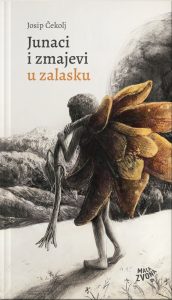
Imagination and a certain freedom in his relation to language as well as an authentic poetical experience characterize Josip Čekolj’s first poetry collection. In four parts – four zeals – the lyrical voice of this young and talented author celebrates the novelty of his first worlds, from the home region, both in a concrete and a symbolic form, to the world of family and first loves. The magic of these poems mostly arises from the peculiar shifts from real to surreal, from bright images that depict an underlying emotion. The author builds his space of words, a space that is built from moments he has experienced. This space is often related to motives that originate in nature and in traditional culture, but it is consistently original, full of surprises and freshness.

In the Age of Warring States

22,00 €

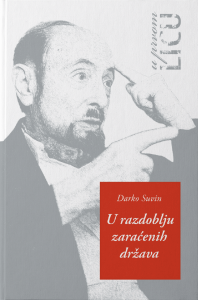
This book is an unusual intellectual autobiography. Firstly, because it consists largely of poetry. And secondly, because the author, Darko Suvin — Professor Emeritus at McGill University in Canada — barely touches upon the central theme of his prolific international career: science fiction. Yet, the poetic and translated texts he has gathered for this edition span seven decades and constitute a lesser-known but significant part of his oeuvre. Since he translated poetry primarily for himself, his selection criteria were based on personal affinity; consequently, his translations — which might best be viewed, in places, as creative renderings — encompass a diverse range of writers, from Laforgue, Housman, Wilde, and Éluard to Du Fu, Chaucer, Brecht, and Fortini. His own poetry, meanwhile, is wide open to both the world of literature and the world of reality; it includes references to political events, wars, and the Capitalocene, alongside a poetic dialogue with the Greek poet Sappho and intimate moments of confronting time and old age. The book’s central section, titled “Parables from the Warring States Period,” is a series of short prose pieces born of the author’s interest in East Asian thought and literature. The short autobiographical texts at the beginning and end of the book are also in prose, as are the notes that situate specific poem cycles in time and space. In this way, the author creates a harmoniously cadenced whole that reflects his journey through the world of words and ideas. Darko Suvin himself selected and arranged the texts for this edition, and the editorial team adhered strictly to his guidelines. Linguistically, the work reflects the changes the Croatian language has undergone over time — evident to the modern reader — while also containing a number of distinctive traits we simply termed “Suvinisms” during the production of the book. Although many of the poems have previously appeared in literary journals, some are published here for the first time. With this selection of writings from “a time of warring states” — an era that shows no sign of relenting — the Mala zvona publishing house aims to introduce a valuable part of this exceptional author’s body of work to the domestic audience.