
• 0 Knjige - 0,00 
    • Košarica je prazna.

Kosjenka and Regoč

17,00  10,20 

One of the most popular fairy tales penned by Ivana Brlić Mažuranić, and one of those that Croatian children first encounter, is precisely the one about Regoč. However, even though the original story is entitled simply “Regoč”, the little fairy Kosjenka plays a more important role in it. Curious and lively, she sets the sluggish giant on an adventure. Cheerful when she finds company, compassionate in times of trouble, she sacrifices all her fairy magic for new friends, for children from two feuding villages near the Zlovoda lake. Although the two main characters belong to the realm of the fantastical, the story ends on a perfectly human note, with the construction of a new village. And while Regoč returns to his town of Legen, Kosjenka can no longer go back among the fairies, so she stays with the children from the village – as well as with little readers. For this silent book, visual artist Vendi Vernić told Ivana Brlić Mažuranić’s story in a purely visual language. For those who do not know the original, there is a small glossary at the beginning. Converted into pictures, the story becomes accessible to preschool readers.

Stories for the End of the World (and Other Everyday Trifles)

17,00  10,20 

Don’t let the title fool you – in these witty micro-stories the end of the world is happening on an (almost) everyday level and “other trifles” may have an unexpected depth. Miniatures by Sanja Lovrenčić, organized in eight “chapters”, seemingly adapted to the short attention span of a modern reader, take into account things like morning-garbage-squads, polar bear wisdom, exodus of delivery people, time-stay-machines, mythical journeys and metaphorical animals. Sometimes entertaining, sometimes meditative, the author’s voice stays firm in defending the art of painting/playing with words and especially vocal against false/alternative literature that (allegedly) paints reality, media, and politics.  

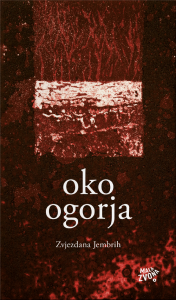
Around Ogorje

15,00  9,00 

In Zvjezdana Jembrih’s third poetry collection all the potentials of her writing merge and come to full expression. Inspired by the specific space, a village in the Split hinterland, the author creates a series of impressive records, reaching a rare level of literary quality. Details from the chosen environment become triggers for surprising images in which the near and the far, the real and the unreal mix, with not even a shadow of sentimentality or commonplace thinking. The poems gathered in this book were created over several years, by slow distillation of the essentials. The result of this process captivates with the range of poetic imagination, the purity and consistency of the concept, the harmonious blending of direct observation, unobtrusive erudition and the ability to translate into a unique language the emotions stirred by different aspects of a (neglected) landscape and its inhabitants.

Rascals in the Gutter

17,00  10,20 

In the best tradition of young adult novels, but with a fresh voice, Josip Čekolj recounts the story of his rascals — four friends on the brink of adulthood. Although the town through which they roam is imaginary, their love and confusion, their conflicts and blunders, much like their need for warmth and belonging are all very real. As the rascals learn to find their way ‘in the gutter’, various characters show up to guide them along. Some are more trustworthy than others, and they largely come from the fringes of society, with perhaps the most important being an old lady with her cats and flair for poetry. And as usually happens in coming-of-age stories, their wading through murky waters becomes a first step towards maturity. The inspiration for this book was the exhibition ‘Rascals and Frogs’ by the visual artist Dominik Vuković, themed around memories of childhood. He illustrated this edition in close collaboration with the author, resulting in a special relationship between the text and illustrations.

Letters for Everyone

15,00  9,00 

This playful and cheerful book is perfect for those learning to read as well as for those who are helping them in this endeavor. Every of thirty very short stories – in which numerous characters, both human and animal, appear – is dominated by one single letter. This letter can be searched for, with ears or eyes, and every story can be continued. This unique spelling book invites the reader to play whereby it turns gaining reading habits into an easy and fun project.

The Cabinet for Sentimental Trivial Literature

12,00  7,20 

Shortlisted for the Predrag Matvejević Award 2021, longlisted for the Fric Award 2019 Sanja Lovrenčić’s books draw into her net a reader who is ready for adventure, for whom reading is not merely following a linear plot and a pastime, but recognition and acceptance of a game that, when joined, becomes infinitely meaningful, subtle and even fun. Her new novel, entitled Cabinet for Sentimental Trivial Literature, in which is its set, but which is also an indicative determinant of what will be told, is certainly one of the “more readable” of her novels, i.e. one in which there are no traps for readers, unless they themselves want to fall into them. Also, as is often the case with this author, its structure is built somewhat conceptually, by changing the epistolary form, which makes up the main flow of narration, with inserted stories that form a rounded and meaningful whole it. There has been a crisis in the Cabinet, which is a kind of small, private and non-profit museum that houses the legacy of “sentimental and trivial literature”. The curator, who writes letters to the late founder Rosa, realizes that not only does the Cabinet need a “cash injection”, but also a new guardian to replace him. Since this is not just an ordinary job but also has a specific emotional and, of course, sentimental value, neither is easy to perform, and a job advertisement that includes one of the key sentences of the novel: “Your story is more important to us than your qualifications”, will further complicate matters. (…) Ten candidates apply to the ad that had inadvertently implied that candidates should also be writers, and they bring with them stories about their professional and private lives, sometimes completely bizarre, but also stories that make up an integral part of the novel. While the curator, who is becoming more and more desperate and sceptical, fills letters to Rosa with fragments from his own and the Cabinet’s everyday life, as well as those concerning the past, origin and meaning of her and his museum, an unusual and “soft” legacy that seems to have been run-over by a time of different imperatives  and priorities, the candidates succeed one another before him, with their experiences, but above all with the stories they enclose, enabling the novel to emerge from the closed space of the Cabinet into the outside, towards modernity and its peculiarities and problems. This “opening” – placed in stories within the story – subtly positions the novel towards recent reality, because it indirectly deals with the themes of art and artistic activism, social responsibility, commercialization and the entry of capital into unprofitable spheres of human activity, feminism. science and technology, but also love, which is one of the shared motives and concerns both interpersonal relationships and the preservation of some past values. (Jagna Pogačnik)

A Handful of Night Journeys

16,00  9,60 

The fourth poetry book by the young award-winning poet Josip Čekolj takes the reader on unexpected journeys through literary worlds. On the nocturnal reading and writing paths, poems in the form of acrostics are created. For these, the poet chooses the first sentences from novels that in some way marked his childhood and youth. In this way, he creates an original dialogue between poetry and prose, erasing the boundaries between older and contemporary literature and between works for children and adults. The diversity of poetic images in this little linguistic masterpiece does not contradict the unity of the whole, which is based on a kind of substrate of the author’s reflection on the world. Acting in the dual role of reader and writer, Čekolj creates verses that spring from personal memories and experiences, resonating with broader social and political problems. The collection is full of strange stylistic figures and unusual syntactic turns, which on the one hand consistently maintain the concept of an acrostic, and on the other reflect the author’s imaginative and creative freedom. With its sense of rhythm and sonority of language, “A Handful of Night Journeys” builds on Čekolj’s previous books, but it also opens up a new poetic direction along the tracks of lyrical language – a conceptually well-thought-out and stylistically rounded work that captivates with its freshness and layered vision.

Notes from the Source, Questions for Later

21,00 

An architect with previous experience as author, in his new book conceived as a sort of travel journal, Tomislav Pavelić reflects on the (co)relationships between man and nature, space and place, history and the present. At the end of his often erudite considerations, he asks questions that serve as both the starting point and the destination of these journeys. Without offering hasty answers, he invites us to approach universal problems with an open mind, illustrated in concrete examples of the regions visited, which form the colorful and dynamic decor of this book: places like Armenia, Sicily, Andalusia, Albania etc. All of these locations and cultures can teach us something about the past, but at the same time they allow us a clearer view into the murky and uncertain future of our civilization.

Art is Smart

18,00  10,80 

At the heart of the new picture book by the award-winning illustrator Agata Lučić is art itself, in all its joyful forms. On the pages of this book, intended for children, but which will delight and cheer up adults as well, we will hear numerous and varied answers to the questions of what art can do, where it can be found, how we can most easily encounter it. ‘Art is Smart’ is a praise of art itself, but also a short lesson for the young ones about different kinds of artistic activity and their equal importance. The picture book is abundantly and dynamically illustrated in the author’s recognizable style, and the text flows in an unstilted poetic style, with cheerful rhymes that arouse curiosity in the reader and draw her on to an optimistic close.

A Reflection in the Rain

17,00  10,20 

Jasmina Kosanović, the author of a series of interesting and well-received picture books, does not seem to know how to tell a story about rain. Instead of words, images come to her, all airy and gentle – truly rainy. But for those who like to give themselves over to their imagination, every illustration in this picture book can be the beginning of an adventure. What are those people waiting for under their umbrellas? Who does a sad man with a scarf break up with? Who is behind the windows where the drops are pouring down? Where is the sailboat sailing under an almost clear, yet still rain-soaked sky? A series of rainy scenes results in the author seeing her own self clearly, sun kissed. Those who imagine a series of their own rainy stories will perhaps find out something about themselves, once they eventually emerge from Jasmina’s dreamy, watercolour world.

The Little Key

17,00  10,20 

Starting from a banal event – a shoe that was untied and a key found on the street – the little heroine of this picture book talks about her loved ones. For each of them, such a key could serve something, unlock something of theirs: mom’s glass showcase, dad’s mysterious drawer, a compartment with love letters in grandma’s cabinet, a friend’s special pencil case, her brother’s box with figurines of dragons and knights. With each contemplation of the key, an image from everyday life is “unlocked”. But in the end, the girl concludes that the key will best serve her and her own imagination.
The author of this story about curiosity is the acclaimed and experienced writer Sanja Lovrenčić, and the book was illustrated by Lucija Mrzljak, an award-winning artist educated in Zagreb, Prague, Krakow and Tallinn.

Meandering with Julije Knifer

18,00  10,80 

“Whenever I find something that I like, I want to tell a story about it” , says the narrator of this book. But she will by no means tell the story of Julije Knifer and his famous meander motif alone. The painter himself talks about anti-paintings and anti-bulbs, about the rhythms of black and white, vertical and horizontal lines, research and the search for extremes – all of this in his own words taken from original diary entries. And the illustrations inspired by his art also tell the readers about his journey towards and with meanders in their own way. In the fifth picture book of their Croatian fine art series, Sanja Lovrenčić and Dominik Vuković present the work of one of the most original and respected Croatian artists of the twentieth century, well-recognized abroad.

Notes from Encountered Lands

17,00  10,20 

Miroslav Kirin’s book of travelogues brings together notes from different periods of the author’s life, but thanks to the coherence of his view and characteristic stylistic refinement, makes an organic whole. You could call it a kind of triptych: it starts with notes from Paris in 2005, the middle and most complex part is dedicated to the author’s sojourns in China, and the book ends with very short notes from various trips through Croatia. The author’s observations move in a wide range: from very simple everyday little things that catch his eye to the broad cultural issues of the Far East. Despite the variety of motives seen in the “encountered lands”, the traveler’s eye shows the same curiosity and the same clarity. The moments he records often turn into micro-stories, and out of the multitude of human outlines that appear in his notes and notebooks, some gain fullness and turn into impressive characters. Poetry runs through Kirin’s notes as a kind of weft – sometimes as initiator of travel, sometimes as an object of work and thought, sometimes as a latent awareness of the poetic values of language. Therefore, this book can give pleasure to both travel lovers and to all those who enjoy good literature.

Ema is Alone

16,00  9,60 

The story about Ema – written by Vanja Marković, an expert in inclusive and social pedagogy – deals with an important topic of our time: the way people perceive each other. Roaming the streets of her hometown, the little heroine is trying to find someone to play with. She encounters a whole bunch of various characters, but they notice only her looks – her shaggy hair, her huge eyes, her dirty jacket. They all nag her and none of them wants to follow her imagination, but her ideas for games remain on pages, as possibilities for readers themselves to develop. In the end even Ema repeats the pattern that surrounds her: when a yellow cat asks her to play with it she refuses the invitation, thinking that a black cat would be much more interesting. In a playful way the story opens the readers’ eyes to the wrongs implied in superficial ways of looking at others. The storyteller’s style is simple and flowing, very well adapted to the target group of readers (6-8). The illustrations by Vibor Juhas complement and enrich the text; they are close to the aesthetics of comic books and full of little visual surprises.

Forgotten Things

17,00  10,20 

In her second artist’s book, Agata Lučić takes readers of all generations to a flea market – an almost monochromatic blue world filled with various objects. Each thing there carries traces of time spent in someone’s life, traces of somebody’s past. The young visual artist evokes fragments of life that “forgotten things” shared with their humans in her original, very recognizable style, gradually creating a warm atmosphere – with bits of magic. The last double-page holds a surprise: as the objects manage to attract new owners and are being accepted along with their stories, various colors enter the world of the picture book. It is no longer a space of memories; it becomes a living space. “Forgotten Things” are both nostalgic and cheerful, they urge the reader to open up to hidden histories of unknown people and certain values accessible only to a watchful eye; they invite both children and adults to dream, offering a world of peculiar visual pleasure. 

We acquire and discard things too easily, warns the author of this gentle and playful picture book; but even when they have already been discarded, left to their fate on the stands of some open-air “mini market”, they can be looked at, singled out from the crowd, appropriated, restored, and brought back to life.


Book #4909

Sketching out a Heroine

12,00  7,20 

As a poet of proven skills, Sanja Lovrenčić sketches a mysterious heroine. Who is she? After reading, it is up to us to conclude. Or to let her continue to take shape within us for a long time. For, this collection of poems counts on the cooperation of a careful watcher and listener, a curious reader sensitive to language and its beyond. Sanja Lovrenčić invites us on an adventurous poetic journey through the poems/episodes of a very special, never fully expressible or sharply drawn protagonist, with whose joys, doubts, insights and resignations we easily empathise. (Dorta Jagić, ed.)

Longlisted for the Kamov Award 2021