• 0 Knjige - 0,00 
    • Košarica je prazna.

In the Age of Warring States

22,00 

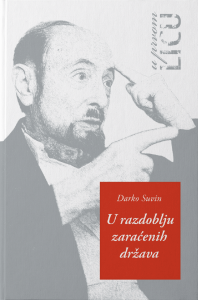
This book is an unusual intellectual autobiography. Firstly, because it consists largely of poetry. And secondly, because the author, Darko Suvin — Professor Emeritus at McGill University in Canada — barely touches upon the central theme of his prolific international career: science fiction. Yet, the poetic and translated texts he has gathered for this edition span seven decades and constitute a lesser-known but significant part of his oeuvre. Since he translated poetry primarily for himself, his selection criteria were based on personal affinity; consequently, his translations — which might best be viewed, in places, as creative renderings — encompass a diverse range of writers, from Laforgue, Housman, Wilde, and Éluard to Du Fu, Chaucer, Brecht, and Fortini. His own poetry, meanwhile, is wide open to both the world of literature and the world of reality; it includes references to political events, wars, and the Capitalocene, alongside a poetic dialogue with the Greek poet Sappho and intimate moments of confronting time and old age. The book’s central section, titled “Parables from the Warring States Period,” is a series of short prose pieces born of the author’s interest in East Asian thought and literature. The short autobiographical texts at the beginning and end of the book are also in prose, as are the notes that situate specific poem cycles in time and space. In this way, the author creates a harmoniously cadenced whole that reflects his journey through the world of words and ideas. Darko Suvin himself selected and arranged the texts for this edition, and the editorial team adhered strictly to his guidelines. Linguistically, the work reflects the changes the Croatian language has undergone over time — evident to the modern reader — while also containing a number of distinctive traits we simply termed “Suvinisms” during the production of the book. Although many of the poems have previously appeared in literary journals, some are published here for the first time. With this selection of writings from “a time of warring states” — an era that shows no sign of relenting — the Mala zvona publishing house aims to introduce a valuable part of this exceptional author’s body of work to the domestic audience.
A Circle Around the Sun

19,00 

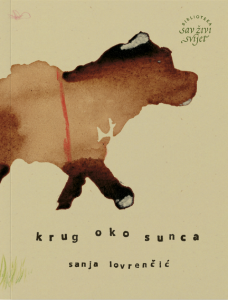
A woman faces the imminent loss of a friend — or rather, a family member. That companion is a dog, and the woman is a poet. The author’s highly distinctive poetics — characterized by fragmented images distilled to their essential, defining elements and a discourse of negotiation (“negotiating for words” — to paraphrase another prominent Croatian poet — but also for meaning and security in an often senseless and uncertain world) — are particularly well-suited for verbalising this experience, which is at once universal and deeply personal. It is only seemingly paradoxical that this text, primarily concerned with impermanence, revolves around endurance: nature, seasonal rhythms, life, and death are all processes inseparable from time and its inherent illogicalities — its varying paces, pauses, and sudden leaps. Sanja Lovrenčić’s new collection fits naturally into the All Things Alive series, serving as a poetic chronicle of a farewell, an attempt to accept the unacceptable, and a profound, multi-layered tribute to the bonds we share with our animal companions — bonds inextricably intertwined with our own habits, daily lives, hopes, sense of security, and even our very identities.

The Story of a Line

18,00 

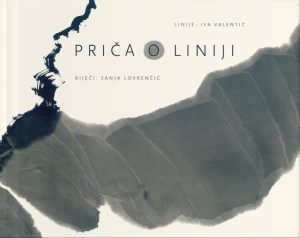
In the land of lines, a new one is born — as a dot. And immediately, it begins to move, for without movement, there is no line. As with any beginning, questions arise: Where to? Which way? How? There are many possibilities to explore, many examples to follow — or perhaps not? The young line will move this way and that before discovering its own rhythm, unfolding in space, and finally declaring: THIS IS ME!

Iva Valentić learned about lines in both the West and the East, studying at art academies in Venice and Beijing. The brushstroke on paper — ever-changing, diverse, surprising, and alive — is her primary means of artistic expression. Sanja Lovrenčić has added a few words to Iva’s visual story of the line, acting like signposts along the way. Together, they have created an original picture book—intended for all generations — a highly subtle book about learning, growth, exploration, and freedom.

The Forgotten Girl

21,00 

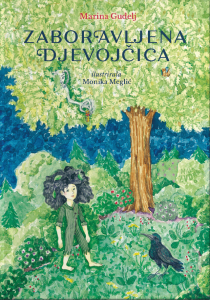
Moriko once lived in a castle. But once when, following her own heart, she broke the rules of her world, a merciless punishment came upon her: she was banished to oblivion. She no longer exists for people. No one can see her or remember her except as a fairy-tale figure. And if someone mentions her, even in passing, she is briefly turned into a fairy. The forest is her home, and a raven is her best friend. She understands trees, hears the feelings of grass and the little sounds in anthills. She sees what is invisible to people: desires and feelings, beings hidden behind the wind, rain, clouds. But the forest is not just a refuge – in its shadows lurk darkness, nightmares and other invisible things, and above them all the powerful and cruel Echo… This is a beautifully imaginative short novel for older children with just the right amount of darkness and a focus on perseverance and following one’s own emotional needs.

The Linden, the Hen, and Justice

19,00 

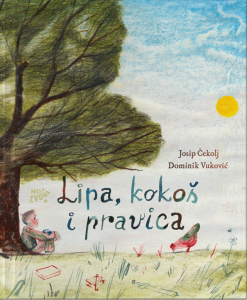
Loosely based on a famous episode from Croatian history, but completely self-contained, this is a colourful fantasy with a strong moral message. A miraculous linden tree grows on a hill and helps a poor boy, Ambrose. A long time ago, when nobles believed that they were born with the right to do and say whatever they wanted, a group of peasants rebelled against them. Ambrose’s father was killed in the peasant revolt, so the boy now has to help his mother and take care of his younger brother and sister. The linden tree understands his plight and recognizes his kindness, granting him three wishes. Ambrose thus confronts the cruel nobleman and his children. On his search for justice, the boy experiences a series of unusual events…

An Important Question Regarding Sandboxes

18,00 

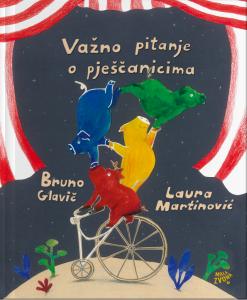
This lively and funny picture book aims to answer an important question: why should sandboxes in kindergartens be covered over at night? The story about four coluorful piglets provides an entertaining and unexpected explanation of a completely ordinary phenomenon from children’s everyday life – the covering over of the kindergarten sandbox at the end of the day. Although it relies mostly on humour, the story also unobtrusively raises important questions about order, responsibility, and shared space, which is extremely useful in a pedagogical sense for preschool and early school-age children. Laura Martinović’s collage illustrations skillfully follow the tone and rhythm of the text.

My Grandma’s Name is Like Chocolate

20,00 

The graphic novel My Grandma’s Name Is Like Chocolate is a gentle, brave, and subtly layered book about memory,loss, and intimacy. By weaving together fragments of conversations, personal notes in prose and verse with expressive black-and-white illustrations, the author writes an intimate biography of her grandmother: a war orphan, an adopted girl, an adult woman, a television journalist and mother, and finally an old woman living in a nursing home, slowly sinking into dementia. But the grandmother is not the only character in this story. Klasja Habjan also speaks about her own experience, about the entire spectrum of feelings she faces when observing her grandmother. Her art is a kind of response to the anxiety caused by the inevitability of loss, but above all, it is a silent act of presence – an attempt to record the story of a life and of a relationship, with care and love.
This artist’s book took shape during Klasja’s residence at the Maison des auteurs in Angoulême, France.

A Woman in the Polar Night

18,00 

In 1934, Christiane Ritter, a thirty-seven-year-old housewife, mother of one child and a woman with some artistic education, set off for Svalbard – more precisely, for the northern coast of the island of Spitsbergen – at the invitation of her husband, a sea captain and a lover of the far north. She was equipped with everything that well-meaning people had advised her to take with her, but none of them knew exactly what awaited her at her destination. Sailing by ship towards the northern latitudes, she hid the ultimate goal of her journey from the other passengers, knowing that in the opinion of most, such an undertaking was not for a woman. Because, indeed, before Christiane, no woman from the so-called civilized world had dared to go to the harsh polar regions; they were associated exclusively with men, explorers, conquerors of the wilderness. However surprised and even intimidated by life in the Arctic wasteland at first, Christiane Ritter  embarks on the adventure bravely. She adapts to a cramped hut, 250 kilometers from the nearest settlement, a dwelling that offers only rudimentary protection from the forces of nature, and tries to run a household for her husband and his assistant Karl. Often left alone – while the two men go hunting, fresh and frozen meat and offal forming the basis of their diet – she manages to cope with the physically demanding circumstances, fear and anxiety.

Even in such situations, her experience of the far north is dominated by admiration and awe of the surrounding natural world. Recording impressions and daily activities in words and images helps her cope with loneliness, and even with the deep, long-lasting darkness of the polar night. These notes will eventually serve as the basis for a book on which the author will work for another two years after returning home, trying to give a literary dimension to her experiences. She completely succeeded; she describes the Arctic world, its animal inhabitants and climatic specifics, the northern lights, the arrival of ice, the harshness of the rocky coast, the life of the minute summer vegetation in an extremely impressive way. Unlike other (male) reports from the polar regions, hers does not emphasize the enterprise and courage of explorers and hunters (although this is also mentioned), but rather the unearthly beauty of the far north and the effect of its extremes on the human psyche. Christiane Ritter’s book is considered a classic work of travel literature, and has been continuously printed in the original German language since 1938, when it was first published. It has been translated into eighteen languages ​​and has also been highly regarded as a translated edition; this is the first translation of this book into Croatian.

Yearning for Spring

18,00 

This prose-poetry reader could prove to be one of the key events of the Anglo-Croatian literary exchange in 2025: in it, translator and poet Goran Čolakhodžić brings a selection of prose and verse by the English early modernist, Edward Thomas, one of the most important voices of British poetry and of the generation of artists who perished in the Great War, and a close friend of the American classic Robert Frost. The rhythms of his verse are quiet and unobtrusive; he was above all a poet of the earth, trees, birds, and the human relationship with nature, but his poetry is also characterized by subtle psychological insights and is overshadowed by the coming world conflict. In addition to tackling Thomas’s rhymed verse and selecting some of the most successful fragments from Thomas’s nature writing, travel journals and articles, Čolakhodžić also wrote a critical preface, notes and his own artistic text juxtaposed with Thomas’s – a diary of the arrival of spring in Zagreb in 2025, which highlights the similarities and differences between England and Croatia, the 19th and 21st centuries, reminding us of the impact that climate change and people’s problematic relationship with nature have on our daily life. The painter Iva Valentić provided stunning artistic responses to the texts collected here, connecting Far Eastern techniques with Western literature.

A Handful of Night Journeys

16,00 

The fourth poetry book by the young award-winning poet Josip Čekolj takes the reader on unexpected journeys through literary worlds. On the nocturnal reading and writing paths, poems in the form of acrostics are created. For these, the poet chooses the first sentences from novels that in some way marked his childhood and youth. In this way, he creates an original dialogue between poetry and prose, erasing the boundaries between older and contemporary literature and between works for children and adults. The diversity of poetic images in this little linguistic masterpiece does not contradict the unity of the whole, which is based on a kind of substrate of the author’s reflection on the world. Acting in the dual role of reader and writer, Čekolj creates verses that spring from personal memories and experiences, resonating with broader social and political problems. The collection is full of strange stylistic figures and unusual syntactic turns, which on the one hand consistently maintain the concept of an acrostic, and on the other reflect the author’s imaginative and creative freedom. With its sense of rhythm and sonority of language, “A Handful of Night Journeys” builds on Čekolj’s previous books, but it also opens up a new poetic direction along the tracks of lyrical language – a conceptually well-thought-out and stylistically rounded work that captivates with its freshness and layered vision.

Bunny and Chick

18,00 

This gentle, cheerful and entertaining story will be engaging for all children of preschool or early school age. Its main character Dalibor thinks he has to be a “big boy” and throw away his childish stuffed animals. Left to their own devices, they manage as best they can, while Dalibor starts having an uneasy conscience… A series of humorous details, a wise lesson at the end and extraordinary illustrations by Vendi Vernić will make Bunny and Chick one of the favourite inhabitants of any child’s bookshelf.

Jezikova juha / Tongue Soup

16,00 

The old cake lady is gone!
Roses aren’t blooming for me!
His axe struck honey!

Visual artist Petra Balekić interprets in her own way – using images and words – just some of the  many coluorful expressions often heard in spoken Croatian. For those who know the language will be reminded od them and have a laugh, while those who don’t will be amazed and learn them with the help of the English translations – and thus avoid getting “tongue soup” for being ignorant.

The Silence of Green

33,00 

Direct contact with nature plays an important role in this little poetic and visual trilogy by two authors, Sanja Lovrenčić and Iva Valentić. Each in her own way, they experience the green worlds – even if those worlds are small, squeezed between concrete and asphalt – as spaces for a silence that is a departure from everyday reality and a prerequisite for creative work. The Silence of Green was originally the title of a series of the authors’ eleven handwritten art books. Connecting the domain of words and the domain of images, they spent several months dealing with urban greenery, transferring the imprints of fragility, diversity, and vitality of urban plants into their hybrid medium. Growing out of this greenery and returning to it again, as a reflection of the life cycle of the plant world, are the calm, contemplative, and questioning verses of Sanja Lovrenčić, as well as the organically flowing illustrations in ink and stamps by Iva Valentić. The authors collected sketches and notes that were made during the period of work on the manuscript books, supplemented them and prepared them for this edition. The trilogy The Silence of Green consists of the volumes Clear Images, Excerpts from a Personal Chronicle and The Silence of Green: The City, all together in a wonderful paper box. It was designed and produced as a bibliophile edition.

A Happy Day in Our Neighbourhood

18,00 

The new picture book by Sanja Lovrenčić and Dominik Vuković follows the journey of a single rose. Passing from hand to hand, the red flower outlines the life of a city neighbourhood through which it is carried by various characters. The neighbourhood is a rich microworld in which chance encounters, small daily rituals and never-ending human dramas take place. The characters that the rose travels among belong to different social groups: from dog walkers, young parents, a shop assistant, a resident of a nursing home and a young artist, to marginalized people such as an elderly homeless man and a street musician. All of them, however, are connected by a simple gesture of kindness: passing the rose from one hand to another. The rose thus becomes a metaphor for the community that permeates the fabric of the city, despite the ever-present differences. Ultimately, this tender flower symbolizes the fragility of every gentle gesture – but also its beauty.

Goat-Foot

15,00 

This story about a fairy is inspired by real-life experience. Its author Mirjana Mrkela speaks about loneliness and feelings of rejection, common in the lives of people who seem different from the majority. As a person who lost her sight in adulthood, the author easily sympathizes with people who are rejected or marginalized in our society for whatever reason. She tells her story as a fairy tale, drawing on certain elements from Slavic mythology. Her heroine, a fairy who, having stepped into the realm of some kind of evil old magic, becomes a goat, retreats from people who do not accept her. She hides in a mountain world of plants and animals and grieves there. But the moon and the sun are there for her, as well as for all other beings. The moon encourages her with its shine, and the sun makes her strong and calm. The pale fairy represents all those who long for understanding and acceptance. The author created the picture book in close collaboration with Katarina Radošević Galić, a Croatian illustrator and scenographer.

The Door I Do Not Know How to Open

17,00 

There is a door that we don’t know how to open. Behind them lies the solution to the riddle, the beginning-and-end. This door leading to afterlife or to the void, are constantly present in some way in the ninth poetry book of the noted Croatian author Marija Lamot. But there are also numerous smaller doors that open wide in her poems – doors leading to memories, landscapes, mirrors, moments scattered in time, flashes of an intense present. They lead into the night, into bright light, into a classroom where philosophy is discussed, into family spaces and, above all, to trees and other beings that do not speak in human voices.