• 0 Knjige - 0,00 
    • Košarica je prazna.

#openwindow

15,00 

This collection of short texts enitled “#openwindow” is an outstanding example of how high-quality and original literature can be created on social media. For a year, author Aida Bagić wrote morning notes while looking out the window in her bedroom and published them on social media, with accompanying photographs. This project was called #openwindow, and resulted in a variety of texts – prose and poetry fragments, comments on daily events, notes on dreams and memories, wordplay and sketches of fairy tales. Often meditative, sometimes factual or playful, they reveal that the author is a skilled writer with an experience in writing poetry. Collected in this book, these notes show how an everyday object can stimulate our imagination, reflection, and introspection. Created in front of a window that opens onto external landscapes, they outline the author’s world of thought and emotion as a unique and interesting inner landscape. These texts are also an invitation to readers to think about their own everyday life, about ways in which they could rethink it so that it is not only more bearable, but also a source of genuine curiosity, sometimes even joy.

A Handful of Night Journeys

16,00  9,60 

The fourth poetry book by the young award-winning poet Josip Čekolj takes the reader on unexpected journeys through literary worlds. On the nocturnal reading and writing paths, poems in the form of acrostics are created. For these, the poet chooses the first sentences from novels that in some way marked his childhood and youth. In this way, he creates an original dialogue between poetry and prose, erasing the boundaries between older and contemporary literature and between works for children and adults. The diversity of poetic images in this little linguistic masterpiece does not contradict the unity of the whole, which is based on a kind of substrate of the author’s reflection on the world. Acting in the dual role of reader and writer, Čekolj creates verses that spring from personal memories and experiences, resonating with broader social and political problems. The collection is full of strange stylistic figures and unusual syntactic turns, which on the one hand consistently maintain the concept of an acrostic, and on the other reflect the author’s imaginative and creative freedom. With its sense of rhythm and sonority of language, “A Handful of Night Journeys” builds on Čekolj’s previous books, but it also opens up a new poetic direction along the tracks of lyrical language – a conceptually well-thought-out and stylistically rounded work that captivates with its freshness and layered vision.

A Happy Day in Our Neighbourhood

18,00 

The new picture book by Sanja Lovrenčić and Dominik Vuković follows the journey of a single rose. Passing from hand to hand, the red flower outlines the life of a city neighbourhood through which it is carried by various characters. The neighbourhood is a rich microworld in which chance encounters, small daily rituals and never-ending human dramas take place. The characters that the rose travels among belong to different social groups: from dog walkers, young parents, a shop assistant, a resident of a nursing home and a young artist, to marginalized people such as an elderly homeless man and a street musician. All of them, however, are connected by a simple gesture of kindness: passing the rose from one hand to another. The rose thus becomes a metaphor for the community that permeates the fabric of the city, despite the ever-present differences. Ultimately, this tender flower symbolizes the fragility of every gentle gesture – but also its beauty.

A Reflection in the Rain

17,00  10,20 

Jasmina Kosanović, the author of a series of interesting and well-received picture books, does not seem to know how to tell a story about rain. Instead of words, images come to her, all airy and gentle – truly rainy. But for those who like to give themselves over to their imagination, every illustration in this picture book can be the beginning of an adventure. What are those people waiting for under their umbrellas? Who does a sad man with a scarf break up with? Who is behind the windows where the drops are pouring down? Where is the sailboat sailing under an almost clear, yet still rain-soaked sky? A series of rainy scenes results in the author seeing her own self clearly, sun kissed. Those who imagine a series of their own rainy stories will perhaps find out something about themselves, once they eventually emerge from Jasmina’s dreamy, watercolour world.

A Short Trip Home and other Stories

14,00  8,40 
Book #3328


A Woman in the Polar Night

18,00  10,80 

In 1934, Christiane Ritter, a thirty-seven-year-old housewife, mother of one child and a woman with some artistic education, set off for Svalbard – more precisely, for the northern coast of the island of Spitsbergen – at the invitation of her husband, a sea captain and a lover of the far north. She was equipped with everything that well-meaning people had advised her to take with her, but none of them knew exactly what awaited her at her destination. Sailing by ship towards the northern latitudes, she hid the ultimate goal of her journey from the other passengers, knowing that in the opinion of most, such an undertaking was not for a woman. Because, indeed, before Christiane, no woman from the so-called civilized world had dared to go to the harsh polar regions; they were associated exclusively with men, explorers, conquerors of the wilderness. However surprised and even intimidated by life in the Arctic wasteland at first, Christiane Ritter  embarks on the adventure bravely. She adapts to a cramped hut, 250 kilometers from the nearest settlement, a dwelling that offers only rudimentary protection from the forces of nature, and tries to run a household for her husband and his assistant Karl. Often left alone – while the two men go hunting, fresh and frozen meat and offal forming the basis of their diet – she manages to cope with the physically demanding circumstances, fear and anxiety.

Even in such situations, her experience of the far north is dominated by admiration and awe of the surrounding natural world. Recording impressions and daily activities in words and images helps her cope with loneliness, and even with the deep, long-lasting darkness of the polar night. These notes will eventually serve as the basis for a book on which the author will work for another two years after returning home, trying to give a literary dimension to her experiences. She completely succeeded; she describes the Arctic world, its animal inhabitants and climatic specifics, the northern lights, the arrival of ice, the harshness of the rocky coast, the life of the minute summer vegetation in an extremely impressive way. Unlike other (male) reports from the polar regions, hers does not emphasize the enterprise and courage of explorers and hunters (although this is also mentioned), but rather the unearthly beauty of the far north and the effect of its extremes on the human psyche. Christiane Ritter’s book is considered a classic work of travel literature, and has been continuously printed in the original German language since 1938, when it was first published. It has been translated into eighteen languages ​​and has also been highly regarded as a translated edition; this is the first translation of this book into Croatian.

All My Loved Ones But Me

13,00  7,80 

Luka Mavretić’s third poetry collection “All My Loved Ones But Me” is a series of “inner journeys” – journeys that the author announces in the first poems of this very thoughtfully built piece. The young poet balances between lyrical verses and prosaic sentences, he strives towards a refined simplicity and manages to create a conversational tone, which is an important building block of his poetical world. An abundance of motives and a diary-like directness make this book an interesting and fresh collection. Even though he uses interpunction which creates finished, harmonical sentences and gives the text a prosaic tone, his verses remain verses, lines with a natural and easy flow. Despite a breezy atmosphere that the author creates, this is a collection of well thought-through and refined texts – Luka Mavretić is a poet who, in an alchemy of words, transforms chosen glimpses of reality into memorable and luminous images.

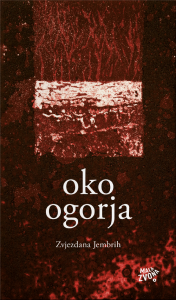
Around Ogorje

15,00  9,00 

In Zvjezdana Jembrih’s third poetry collection all the potentials of her writing merge and come to full expression. Inspired by the specific space, a village in the Split hinterland, the author creates a series of impressive records, reaching a rare level of literary quality. Details from the chosen environment become triggers for surprising images in which the near and the far, the real and the unreal mix, with not even a shadow of sentimentality or commonplace thinking. The poems gathered in this book were created over several years, by slow distillation of the essentials. The result of this process captivates with the range of poetic imagination, the purity and consistency of the concept, the harmonious blending of direct observation, unobtrusive erudition and the ability to translate into a unique language the emotions stirred by different aspects of a (neglected) landscape and its inhabitants.

Art is Smart

18,00  10,80 

At the heart of the new picture book by the award-winning illustrator Agata Lučić is art itself, in all its joyful forms. On the pages of this book, intended for children, but which will delight and cheer up adults as well, we will hear numerous and varied answers to the questions of what art can do, where it can be found, how we can most easily encounter it. ‘Art is Smart’ is a praise of art itself, but also a short lesson for the young ones about different kinds of artistic activity and their equal importance. The picture book is abundantly and dynamically illustrated in the author’s recognizable style, and the text flows in an unstilted poetic style, with cheerful rhymes that arouse curiosity in the reader and draw her on to an optimistic close.

Bunny and Chick

18,00  10,80 

This gentle, cheerful and entertaining story will be engaging for all children of preschool or early school age. Its main character Dalibor thinks he has to be a “big boy” and throw away his childish stuffed animals. Left to their own devices, they manage as best they can, while Dalibor starts having an uneasy conscience… A series of humorous details, a wise lesson at the end and extraordinary illustrations by Vendi Vernić will make Bunny and Chick one of the favourite inhabitants of any child’s bookshelf.

Cats

12,00  7,20 

In Cats, the author offers several connected tales: a brave cat Mortimer goes to the sea to see the great white shark (meeting on his way the dangerous mister Darkly); a company of wandering acrobat-cats falls apart because of a very strange problem; Zigfrid and Zelda, brother and sister, practice the skills of measuring and sewing in their own way; and cat chefs, Leonard and Edgar are making pancakes for all of them.


Age: 4-6

Chet Baker on the Beach

17,00 

In the new poetry book by the acclaimed and award-winning Croatian poet Ivan Babić, “Chet Baker on the Beach”, the readers will notice, on the one hand, the maturity, clarity of concept and stylistic certainty of this experienced writer, and on the other hand his talent for a short form that unites the lyrical and the meditative, and within which the author manages to transform elements of sensory, organic reality into imaginative metaphor. The dominant thematic framework of these subtle poems is love. The foreboding of opening up to another person, the fragility of closeness, unrest, hope and absence alternate like musical variations in a book that is, as the title already testifies, inspired and imbued with music. Music is, however, most present in the poems of the central, titular cycle, where it appears in a multiple role – as an incentive for language, as a possibility of dialogue across the barriers that separate different artistic disciplines, as an embodiment of psychological states and moods. Breath and respiration run through the manuscript as an organic link between music and song, but also as the presence of the living world of nature for which the author shows a special sensitivity (noted in his previous collections). Babić’s sense of language is manifested in lexical abundance, a flexible sentence that manages to remain light despite its complexity, an imaginative but unobtrusive creation of neologisms, and the ability to create a small, concise and rounded whole with well-chosen words.