-
 Feminine Side of the Croatian Literature
14,00 € × 1
Feminine Side of the Croatian Literature
14,00 € × 1
Ukupno : 14,00 €

 Feminine Side of the Croatian Literature
14,00 € × 1
Feminine Side of the Croatian Literature
14,00 € × 1 Ukupno : 14,00 €
This collection of short texts enitled “#openwindow” is an outstanding example of how high-quality and original literature can be created on social media. For a year, author Aida Bagić wrote morning notes while looking out the window in her bedroom and published them on social media, with accompanying photographs. This project was called #openwindow, and resulted in a variety of texts – prose and poetry fragments, comments on daily events, notes on dreams and memories, wordplay and sketches of fairy tales. Often meditative, sometimes factual or playful, they reveal that the author is a skilled writer with an experience in writing poetry. Collected in this book, these notes show how an everyday object can stimulate our imagination, reflection, and introspection. Created in front of a window that opens onto external landscapes, they outline the author’s world of thought and emotion as a unique and interesting inner landscape. These texts are also an invitation to readers to think about their own everyday life, about ways in which they could rethink it so that it is not only more bearable, but also a source of genuine curiosity, sometimes even joy.
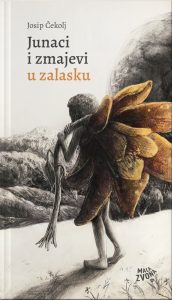
The fourth poetry book by the young award-winning poet Josip Čekolj takes the reader on unexpected journeys through literary worlds. On the nocturnal reading and writing paths, poems in the form of acrostics are created. For these, the poet chooses the first sentences from novels that in some way marked his childhood and youth. In this way, he creates an original dialogue between poetry and prose, erasing the boundaries between older and contemporary literature and between works for children and adults. The diversity of poetic images in this little linguistic masterpiece does not contradict the unity of the whole, which is based on a kind of substrate of the author’s reflection on the world. Acting in the dual role of reader and writer, Čekolj creates verses that spring from personal memories and experiences, resonating with broader social and political problems. The collection is full of strange stylistic figures and unusual syntactic turns, which on the one hand consistently maintain the concept of an acrostic, and on the other reflect the author’s imaginative and creative freedom. With its sense of rhythm and sonority of language, “A Handful of Night Journeys” builds on Čekolj’s previous books, but it also opens up a new poetic direction along the tracks of lyrical language – a conceptually well-thought-out and stylistically rounded work that captivates with its freshness and layered vision.
A collection of short stories by Virgina Woolf, first time in Croatian translation.
Translated by Sanja Lovrenčić
Kikop Award for the best literary translation in 2012.
In 1934, Christiane Ritter, a thirty-seven-year-old housewife, mother of one child and a woman with some artistic education, set off for Svalbard – more precisely, for the northern coast of the island of Spitsbergen – at the invitation of her husband, a sea captain and a lover of the far north. She was equipped with everything that well-meaning people had advised her to take with her, but none of them knew exactly what awaited her at her destination. Sailing by ship towards the northern latitudes, she hid the ultimate goal of her journey from the other passengers, knowing that in the opinion of most, such an undertaking was not for a woman. Because, indeed, before Christiane, no woman from the so-called civilized world had dared to go to the harsh polar regions; they were associated exclusively with men, explorers, conquerors of the wilderness. However surprised and even intimidated by life in the Arctic wasteland at first, Christiane Ritter embarks on the adventure bravely. She adapts to a cramped hut, 250 kilometers from the nearest settlement, a dwelling that offers only rudimentary protection from the forces of nature, and tries to run a household for her husband and his assistant Karl. Often left alone – while the two men go hunting, fresh and frozen meat and offal forming the basis of their diet – she manages to cope with the physically demanding circumstances, fear and anxiety.
Even in such situations, her experience of the far north is dominated by admiration and awe of the surrounding natural world. Recording impressions and daily activities in words and images helps her cope with loneliness, and even with the deep, long-lasting darkness of the polar night. These notes will eventually serve as the basis for a book on which the author will work for another two years after returning home, trying to give a literary dimension to her experiences. She completely succeeded; she describes the Arctic world, its animal inhabitants and climatic specifics, the northern lights, the arrival of ice, the harshness of the rocky coast, the life of the minute summer vegetation in an extremely impressive way. Unlike other (male) reports from the polar regions, hers does not emphasize the enterprise and courage of explorers and hunters (although this is also mentioned), but rather the unearthly beauty of the far north and the effect of its extremes on the human psyche. Christiane Ritter’s book is considered a classic work of travel literature, and has been continuously printed in the original German language since 1938, when it was first published. It has been translated into eighteen languages and has also been highly regarded as a translated edition; this is the first translation of this book into Croatian.
Luka Mavretić’s third poetry collection “All My Loved Ones But Me” is a series of “inner journeys” – journeys that the author announces in the first poems of this very thoughtfully built piece. The young poet balances between lyrical verses and prosaic sentences, he strives towards a refined simplicity and manages to create a conversational tone, which is an important building block of his poetical world. An abundance of motives and a diary-like directness make this book an interesting and fresh collection. Even though he uses interpunction which creates finished, harmonical sentences and gives the text a prosaic tone, his verses remain verses, lines with a natural and easy flow. Despite a breezy atmosphere that the author creates, this is a collection of well thought-through and refined texts – Luka Mavretić is a poet who, in an alchemy of words, transforms chosen glimpses of reality into memorable and luminous images.
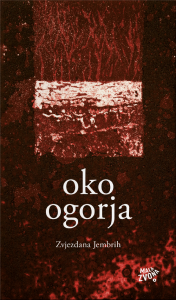
In Zvjezdana Jembrih’s third poetry collection all the potentials of her writing merge and come to full expression. Inspired by the specific space, a village in the Split hinterland, the author creates a series of impressive records, reaching a rare level of literary quality. Details from the chosen environment become triggers for surprising images in which the near and the far, the real and the unreal mix, with not even a shadow of sentimentality or commonplace thinking. The poems gathered in this book were created over several years, by slow distillation of the essentials. The result of this process captivates with the range of poetic imagination, the purity and consistency of the concept, the harmonious blending of direct observation, unobtrusive erudition and the ability to translate into a unique language the emotions stirred by different aspects of a (neglected) landscape and its inhabitants.
In the new poetry book by the acclaimed and award-winning Croatian poet Ivan Babić, “Chet Baker on the Beach”, the readers will notice, on the one hand, the maturity, clarity of concept and stylistic certainty of this experienced writer, and on the other hand his talent for a short form that unites the lyrical and the meditative, and within which the author manages to transform elements of sensory, organic reality into imaginative metaphor. The dominant thematic framework of these subtle poems is love. The foreboding of opening up to another person, the fragility of closeness, unrest, hope and absence alternate like musical variations in a book that is, as the title already testifies, inspired and imbued with music. Music is, however, most present in the poems of the central, titular cycle, where it appears in a multiple role – as an incentive for language, as a possibility of dialogue across the barriers that separate different artistic disciplines, as an embodiment of psychological states and moods. Breath and respiration run through the manuscript as an organic link between music and song, but also as the presence of the living world of nature for which the author shows a special sensitivity (noted in his previous collections). Babić’s sense of language is manifested in lexical abundance, a flexible sentence that manages to remain light despite its complexity, an imaginative but unobtrusive creation of neologisms, and the ability to create a small, concise and rounded whole with well-chosen words.
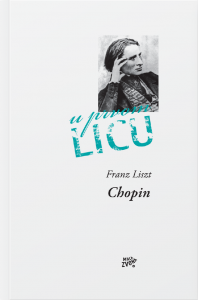
A book on Frederic Chopin written by his colleague and friend Franz Liszt. Croatian translation of the first French edition. Preface by pianist Veljko Glodić, professor at the Music Academy in Zagreb.
Although it could seem that the primary origin of this poetry is the world of words – the author recurrently affirms the experience of reading as something very much alive and inspiring – the contact with her own material environment is equally important for Lidija Dujić. And no matter how linguistically complex, surprising, metaphorical this poetry is, and how far it takes (ironic) distance from reality, it always remains tied to the real moment that triggered poetic imagination and caused poetic language to flow. Singling out some moments, turning flashes of reality into a thoughtful linguistic structure, the poet creates original and meditative images, with a clear awareness of poetry as non-ordinary speech.
Exploring the feminine side of Croatian literature Lidija Dujić offers a concise and interesting overview of selected segment of the Croatian literary history. She gives biographial sketches of Croatian female writers, explores the reception of their work and cliche images of women writers from the times of Renaissance to the contemporary age. Analyzing and re-valuing some works, recognized under the label of “women’s literature”, the author challenges many commonplace notions – writing in first person singular. The book is based on her doctoral dissertation, but is intended for a wider audience.
How would a dog perceive the Victorian era? What would be this dog’s attitude towards his mistress – the great poet Elizabeth Barrett Browning? What happens when a biographical content is treated from a purely fictional perspective? These are the questions posed, and answered, in the short novel Flush; a Biography. In this playful, seemingly frivolous but very lucid, stylistically flawless text, Virginia Woolf is dealing with the issues of history, society conventions and social justice, while exploring in the extreme the possibilities of rendering of the perceptual perspective of an animal.
Diaries by the famous Croatian writer Ivana Brlić Mažuranić, written in the 1880s when she was fifteen to eighteen years old. The book provides insight into teenage life in the 19th century in Zagreb, the charming young character of the writer, her thoughts on literature, life and death, as well as the seeds of conflicts awaiting a female writer – all of which makes it a highly interesting read.
Imagination and a certain freedom in his relation to language as well as an authentic poetical experience characterize Josip Čekolj’s first poetry collection. In four parts – four zeals – the lyrical voice of this young and talented author celebrates the novelty of his first worlds, from the home region, both in a concrete and a symbolic form, to the world of family and first loves. The magic of these poems mostly arises from the peculiar shifts from real to surreal, from bright images that depict an underlying emotion. The author builds his space of words, a space that is built from moments he has experienced. This space is often related to motives that originate in nature and in traditional culture, but it is consistently original, full of surprises and freshness.
My dearr heart, my lovely little one – thus begin the gentle letters Henri Barbusse wrote to his wife a hundred years ago. What follows is by no means gentle – trenches, shells, mud and the dead, the war that is revealed in its bloody meaninglessness. In the year 1914. the writer of letters, Henri Barbusse, was 41, had a reputation as a writer and editor, was not in the best health and had firm pacifist beliefs. Despite all this he volunteered for the French Army and spent the two first years of war on the front lines – and wrote his novel Under Fire, literary testimony of the World War I, which earned him the Goncourt prize and thousands of readers. Documentary material on which is based his novel is found in the letters he wrote almost daily to his wife Hélyonne. In their immediacy and authenticity, those letters can convey to the reader of today the drama of the beginning of the “short twentieth century” better than any fiction.