• 0 Knjige - 0,00 
    • Košarica je prazna.

Adults

A Woman in the Polar Night

18,00 

In 1934, Christiane Ritter, a thirty-seven-year-old housewife, mother of one child and a woman with some artistic education, set off for Svalbard – more precisely, for the northern coast of the island of Spitsbergen – at the invitation of her husband, a sea captain and a lover of the far north. She was equipped with everything that well-meaning people had advised her to take with her, but none of them knew exactly what awaited her at her destination. Sailing by ship towards the northern latitudes, she hid the ultimate goal of her journey from the other passengers, knowing that in the opinion of most, such an undertaking was not for a woman. Because, indeed, before Christiane, no woman from the so-called civilized world had dared to go to the harsh polar regions; they were associated exclusively with men, explorers, conquerors of the wilderness. However surprised and even intimidated by life in the Arctic wasteland at first, Christiane Ritter  embarks on the adventure bravely. She adapts to a cramped hut, 250 kilometers from the nearest settlement, a dwelling that offers only rudimentary protection from the forces of nature, and tries to run a household for her husband and his assistant Karl. Often left alone – while the two men go hunting, fresh and frozen meat and offal forming the basis of their diet – she manages to cope with the physically demanding circumstances, fear and anxiety.

Even in such situations, her experience of the far north is dominated by admiration and awe of the surrounding natural world. Recording impressions and daily activities in words and images helps her cope with loneliness, and even with the deep, long-lasting darkness of the polar night. These notes will eventually serve as the basis for a book on which the author will work for another two years after returning home, trying to give a literary dimension to her experiences. She completely succeeded; she describes the Arctic world, its animal inhabitants and climatic specifics, the northern lights, the arrival of ice, the harshness of the rocky coast, the life of the minute summer vegetation in an extremely impressive way. Unlike other (male) reports from the polar regions, hers does not emphasize the enterprise and courage of explorers and hunters (although this is also mentioned), but rather the unearthly beauty of the far north and the effect of its extremes on the human psyche. Christiane Ritter’s book is considered a classic work of travel literature, and has been continuously printed in the original German language since 1938, when it was first published. It has been translated into eighteen languages ​​and has also been highly regarded as a translated edition; this is the first translation of this book into Croatian.

Yearning for Spring

18,00 

This prose-poetry reader could prove to be one of the key events of the Anglo-Croatian literary exchange in 2025: in it, translator and poet Goran Čolakhodžić brings a selection of prose and verse by the English early modernist, Edward Thomas, one of the most important voices of British poetry and of the generation of artists who perished in the Great War, and a close friend of the American classic Robert Frost. The rhythms of his verse are quiet and unobtrusive; he was above all a poet of the earth, trees, birds, and the human relationship with nature, but his poetry is also characterized by subtle psychological insights and is overshadowed by the coming world conflict. In addition to tackling Thomas’s rhymed verse and selecting some of the most successful fragments from Thomas’s nature writing, travel journals and articles, Čolakhodžić also wrote a critical preface, notes and his own artistic text juxtaposed with Thomas’s – a diary of the arrival of spring in Zagreb in 2025, which highlights the similarities and differences between England and Croatia, the 19th and 21st centuries, reminding us of the impact that climate change and people’s problematic relationship with nature have on our daily life. The painter Iva Valentić provided stunning artistic responses to the texts collected here, connecting Far Eastern techniques with Western literature.

A Handful of Night Journeys

16,00 

The fourth poetry book by the young award-winning poet Josip Čekolj takes the reader on unexpected journeys through literary worlds. On the nocturnal reading and writing paths, poems in the form of acrostics are created. For these, the poet chooses the first sentences from novels that in some way marked his childhood and youth. In this way, he creates an original dialogue between poetry and prose, erasing the boundaries between older and contemporary literature and between works for children and adults. The diversity of poetic images in this little linguistic masterpiece does not contradict the unity of the whole, which is based on a kind of substrate of the author’s reflection on the world. Acting in the dual role of reader and writer, Čekolj creates verses that spring from personal memories and experiences, resonating with broader social and political problems. The collection is full of strange stylistic figures and unusual syntactic turns, which on the one hand consistently maintain the concept of an acrostic, and on the other reflect the author’s imaginative and creative freedom. With its sense of rhythm and sonority of language, “A Handful of Night Journeys” builds on Čekolj’s previous books, but it also opens up a new poetic direction along the tracks of lyrical language – a conceptually well-thought-out and stylistically rounded work that captivates with its freshness and layered vision.

The Silence of Green

33,00 

Direct contact with nature plays an important role in this little poetic and visual trilogy by two authors, Sanja Lovrenčić and Iva Valentić. Each in her own way, they experience the green worlds – even if those worlds are small, squeezed between concrete and asphalt – as spaces for a silence that is a departure from everyday reality and a prerequisite for creative work. The Silence of Green was originally the title of a series of the authors’ eleven handwritten art books. Connecting the domain of words and the domain of images, they spent several months dealing with urban greenery, transferring the imprints of fragility, diversity, and vitality of urban plants into their hybrid medium. Growing out of this greenery and returning to it again, as a reflection of the life cycle of the plant world, are the calm, contemplative, and questioning verses of Sanja Lovrenčić, as well as the organically flowing illustrations in ink and stamps by Iva Valentić. The authors collected sketches and notes that were made during the period of work on the manuscript books, supplemented them and prepared them for this edition. The trilogy The Silence of Green consists of the volumes Clear Images, Excerpts from a Personal Chronicle and The Silence of Green: The City, all together in a wonderful paper box. It was designed and produced as a bibliophile edition.

The Door I Do Not Know How to Open

17,00 

There is a door that we don’t know how to open. Behind them lies the solution to the riddle, the beginning-and-end. This door leading to afterlife or to the void, are constantly present in some way in the ninth poetry book of the noted Croatian author Marija Lamot. But there are also numerous smaller doors that open wide in her poems – doors leading to memories, landscapes, mirrors, moments scattered in time, flashes of an intense present. They lead into the night, into bright light, into a classroom where philosophy is discussed, into family spaces and, above all, to trees and other beings that do not speak in human voices.

Notes from the Source, Questions for Later

21,00 

An architect with previous experience as author, in his new book conceived as a sort of travel journal, Tomislav Pavelić reflects on the (co)relationships between man and nature, space and place, history and the present. At the end of his often erudite considerations, he asks questions that serve as both the starting point and the destination of these journeys. Without offering hasty answers, he invites us to approach universal problems with an open mind, illustrated in concrete examples of the regions visited, which form the colorful and dynamic decor of this book: places like Armenia, Sicily, Andalusia, Albania etc. All of these locations and cultures can teach us something about the past, but at the same time they allow us a clearer view into the murky and uncertain future of our civilization.

Chet Baker on the Beach

17,00 

In the new poetry book by the acclaimed and award-winning Croatian poet Ivan Babić, “Chet Baker on the Beach”, the readers will notice, on the one hand, the maturity, clarity of concept and stylistic certainty of this experienced writer, and on the other hand his talent for a short form that unites the lyrical and the meditative, and within which the author manages to transform elements of sensory, organic reality into imaginative metaphor. The dominant thematic framework of these subtle poems is love. The foreboding of opening up to another person, the fragility of closeness, unrest, hope and absence alternate like musical variations in a book that is, as the title already testifies, inspired and imbued with music. Music is, however, most present in the poems of the central, titular cycle, where it appears in a multiple role – as an incentive for language, as a possibility of dialogue across the barriers that separate different artistic disciplines, as an embodiment of psychological states and moods. Breath and respiration run through the manuscript as an organic link between music and song, but also as the presence of the living world of nature for which the author shows a special sensitivity (noted in his previous collections). Babić’s sense of language is manifested in lexical abundance, a flexible sentence that manages to remain light despite its complexity, an imaginative but unobtrusive creation of neologisms, and the ability to create a small, concise and rounded whole with well-chosen words.

#openwindow

15,00 

This collection of short texts enitled “#openwindow” is an outstanding example of how high-quality and original literature can be created on social media. For a year, author Aida Bagić wrote morning notes while looking out the window in her bedroom and published them on social media, with accompanying photographs. This project was called #openwindow, and resulted in a variety of texts – prose and poetry fragments, comments on daily events, notes on dreams and memories, wordplay and sketches of fairy tales. Often meditative, sometimes factual or playful, they reveal that the author is a skilled writer with an experience in writing poetry. Collected in this book, these notes show how an everyday object can stimulate our imagination, reflection, and introspection. Created in front of a window that opens onto external landscapes, they outline the author’s world of thought and emotion as a unique and interesting inner landscape. These texts are also an invitation to readers to think about their own everyday life, about ways in which they could rethink it so that it is not only more bearable, but also a source of genuine curiosity, sometimes even joy.

Point Nemo

14,00 

Mladen Kopjar is an author with extensive experience in writing different types of literary texts. In “Point Nemo”, his first collection of poetry, this experience is reflected in the ease and skill with which he builds his poetic world, as well as in his thoughtful and consistent poetics. The origins of the poems are usually in everyday life, its spaces, objects, small events, memories, but thanks to the gift of observation and skillful selection of details, the author skillfully avoids the superficiality and banality of “realistic” writing. Freedom and imagination lead him from concrete experience to surreal images in which personal associations are mixed with various fragments from the ubiquitous virtual space. But the unique tone of this collection stems from the deep emotionality with which the whole is imbued; the author addresses (or talks about) his loved ones: wife, child, parents, meandering through areas of tenderness and pain. In that intimate space, the outside world is mirrored in flashes; the original clash between an authentically, intensely internal world and a diverse, sometimes aggressive external world gives this poetry strength and interest.

Stories for the End of the World (and Other Everyday Trifles)

17,00 

Don’t let the title fool you – in these witty micro-stories the end of the world is happening on an (almost) everyday level and “other trifles” may have an unexpected depth. Miniatures by Sanja Lovrenčić, organized in eight “chapters”, seemingly adapted to the short attention span of a modern reader, take into account things like morning-garbage-squads, polar bear wisdom, exodus of delivery people, time-stay-machines, mythical journeys and metaphorical animals. Sometimes entertaining, sometimes meditative, the author’s voice stays firm in defending the art of painting/playing with words and especially vocal against false/alternative literature that (allegedly) paints reality, media, and politics.  

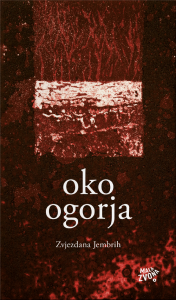
Around Ogorje

15,00 

In Zvjezdana Jembrih’s third poetry collection all the potentials of her writing merge and come to full expression. Inspired by the specific space, a village in the Split hinterland, the author creates a series of impressive records, reaching a rare level of literary quality. Details from the chosen environment become triggers for surprising images in which the near and the far, the real and the unreal mix, with not even a shadow of sentimentality or commonplace thinking. The poems gathered in this book were created over several years, by slow distillation of the essentials. The result of this process captivates with the range of poetic imagination, the purity and consistency of the concept, the harmonious blending of direct observation, unobtrusive erudition and the ability to translate into a unique language the emotions stirred by different aspects of a (neglected) landscape and its inhabitants.

Dormitory

14,00 

Although it could seem that the primary origin of this poetry is the world of words – the author recurrently affirms the experience of reading as something very much alive and inspiring – the contact with her own material environment is equally important for Lidija Dujić. And no matter how linguistically complex, surprising, metaphorical this poetry is, and how far it takes (ironic) distance from reality, it always remains tied to the real moment that triggered poetic imagination and caused poetic language to flow. Singling out some moments, turning flashes of reality into a thoughtful linguistic structure, the poet creates original and meditative images, with a clear awareness of poetry as non-ordinary speech.

Notes from Encountered Lands

17,00 

Miroslav Kirin’s book of travelogues brings together notes from different periods of the author’s life, but thanks to the coherence of his view and characteristic stylistic refinement, makes an organic whole. You could call it a kind of triptych: it starts with notes from Paris in 2005, the middle and most complex part is dedicated to the author’s sojourns in China, and the book ends with very short notes from various trips through Croatia. The author’s observations move in a wide range: from very simple everyday little things that catch his eye to the broad cultural issues of the Far East. Despite the variety of motives seen in the “encountered lands”, the traveler’s eye shows the same curiosity and the same clarity. The moments he records often turn into micro-stories, and out of the multitude of human outlines that appear in his notes and notebooks, some gain fullness and turn into impressive characters. Poetry runs through Kirin’s notes as a kind of weft – sometimes as initiator of travel, sometimes as an object of work and thought, sometimes as a latent awareness of the poetic values of language. Therefore, this book can give pleasure to both travel lovers and to all those who enjoy good literature.

Red Doves

19,00 

The plot of this novel begins with the female narrator’s arrival on an unnamed Mediterranean island. She has inherited a house in an almost abandoned village and comes to see it; it is a good reason to get away from her daily struggles for a while. The landscape around her is nostalgically idyllic: crumbling stone houses, wild capers, homemade cheese, sunshine and wind. Everything suggests that there, at a distance from people, precarious jobs and urban routine, she’ll find a space for introspection, for facing her past, her desires and hopes. Along with the house, however, the narrator inherited a dovecot with a flock of pigeons bred by her deceased cousin, Toni. When she decides to release them from their prison, she has no idea that these homing birds will soon return to her along with six peculiar guests – Toni’s old friends. They organize a memorial party for him, and during three consecutive evenings they relate fragments of their shared past. Were they an international theater troupe that wandered the Mediterranean small towns in the seventies, or active participants in the political turmoil of the age of lead – it is difficult for the heroine to decide. At the end of the party, before they go away, the strange guests explain the true nature of her newly acquired inheritance: along with the house, she gets the obligation to tell their story, a story she did not fully grasp. And that’s where the Mediterranean idyll comes to an end: it will be replaced by a research into international terrorism in the 1970s, a personal revolt against the clash of wealth and poverty at that time and in the present, growing compassion for non-human living world and growing anger provoked by deadly business practices, cyber-subversions,  anger, fear and escape. To the fragments of her guests’ stories the heroine will react creating her own, a story that she will – when the storm she provoked subsides – almost unintentionally leave as a legacy to the new generation.

All My Loved Ones But Me

13,00 

Luka Mavretić’s third poetry collection “All My Loved Ones But Me” is a series of “inner journeys” – journeys that the author announces in the first poems of this very thoughtfully built piece. The young poet balances between lyrical verses and prosaic sentences, he strives towards a refined simplicity and manages to create a conversational tone, which is an important building block of his poetical world. An abundance of motives and a diary-like directness make this book an interesting and fresh collection. Even though he uses interpunction which creates finished, harmonical sentences and gives the text a prosaic tone, his verses remain verses, lines with a natural and easy flow. Despite a breezy atmosphere that the author creates, this is a collection of well thought-through and refined texts – Luka Mavretić is a poet who, in an alchemy of words, transforms chosen glimpses of reality into memorable and luminous images.

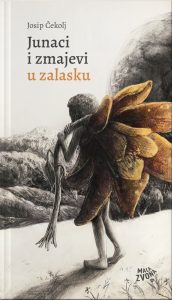
Heroes and Dragons on the Decline

13,00 

Imagination and a certain freedom in his relation to language as well as an authentic poetical experience characterize Josip Čekolj’s first poetry collection. In four parts – four zeals – the lyrical voice of this young and talented author celebrates the novelty of his first worlds, from the home region, both in a concrete and a symbolic form, to the world of family and first loves. The magic of these poems mostly arises from the peculiar shifts from real to surreal, from bright images that depict an underlying emotion. The author builds his space of words, a space that is built from moments he has experienced. This space is often related to motives that originate in nature and in traditional culture, but it is consistently original, full of surprises and freshness.