-
 "La Morte Amoureuse" and Other Stories
× 1
"La Morte Amoureuse" and Other Stories
× 112,00 €7,20 €
Ukupno : 7,20 €

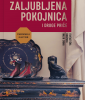 "La Morte Amoureuse" and Other Stories
Ukupno : 7,20 €
13,00 € 7,80 €
“In the Rhythm of Horror – The Abyss of Dances” is a collection of six fantasy stories by young Croatian authors. The stories were chosen via a competition that Mala zvona held in 2020, after which authors Josip Čekolj, Mateja Pavlic, Marin Pelaić, Ines Vajzović, Martina Vidaić and Orin Ivan Vrkaš were chosen. Except for the characteristic fantastical elements of the unexpected and wondrous, the motive of dance also connects the stories – a dance of the dead and the arisen, a dance of half-humans and half-animals in the moonlight, an oriental dance of wraiths in black capes. These obnoxious dancers contribute to an uneasy atmosphere but at the same time, they create an aura of mystical beauty. Each story is illustrated with a black and white piece by Klara Rusan Klarxy – her work masterly depicts the merge of the real and the otherworldly, and makes a world that might seem dark and bizarre mysteriously alluring.
Format: 15×21
ISBN: 978-953-8313-30-1
Number of pages: 112
Hardcover
Published: 2021.
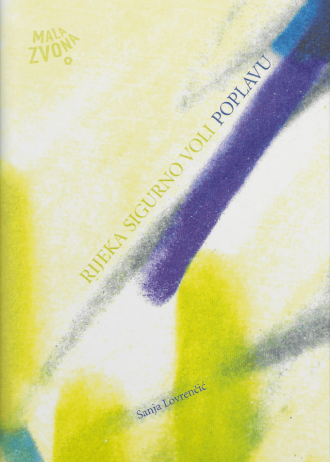
In her first poems Sanja Lovrenčić distanced herself in an elitist manner from the descriptiveness of reality and its usual subjects, but now in the collection A River Certainly does Love the Flood she approaches them in a relaxed manner equipped with elements of fairy tales – dreaminess, flax-ness and cotton-ness. Suddenly, for her, everything is utterable, without the pronounced use of the notional labyrinth or the figurative debris prominent with some other writers (…) Sometimes she would reach for the images that are close to a child’s concept of the world. Naturally, it is only an excuse. We are dealing here with a skilful mimicry of childlike tameness and imagination by the complexity and even aggression of adulthood. For our times, the author is really a gentle poet (but not a coy nor a complaining one) who by no means wants to use parasitic additions to make beauty, but neither does she want to use those purely technical, artificial means with “witchcraft” intentions. She is interested in a “walk with pebbles”. In all probably this is what contributed to her being the laureate of the Kiklop Award for the best poetry collection in the year 2007. (Sead Begović)
Kiklop Award for the best poetry book, 2007.
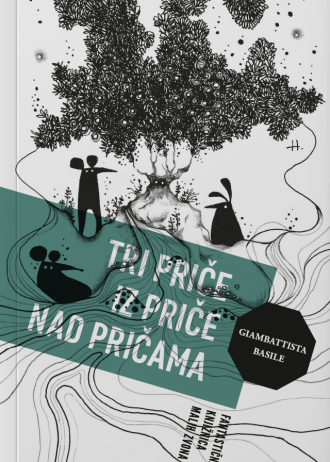
Mala zvona is proud to present the first Croatian translation of a selection of stories from Giambattista Basile’s famousTale of Tales (Lo cunto de li cunti or Il Pentamerone)
Basile’s collection, written in the 17th century in Neapolitan dialect, served as an inspiration to numerous fairy tale writers over the centuries; Basile’s motifs can be traced through many famous collections, such as those written by Perrault or the brothers Grimm.
In these grotesque stories – which are by no means intended for children – Basile teaches the reader about virtue, vice, deception and love while using a flamboyant Baroque rhetoric. Our selection includes the following stories: The Enchanted Doe, The Flea and The Old Woman Who Was Skinned who were also used as a pretext for Matteo Garrone’s multiple award-winning movie Il racconto dei racconti.
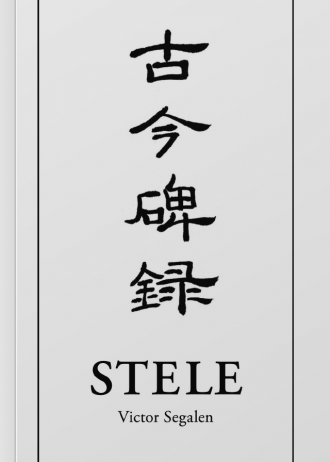
Integral text of the famous poetry collection “Steles” by Vicotr Segalen, one of the classic works of French modernism, for the first time in the Croatian translation, with new calligraphies of Chinese epigrams. Translated by Stephane Michel, Senka Sedmak and Sanja Lovrenčić; calligraphied by Iva Valentić and Ming Sheng Pi.
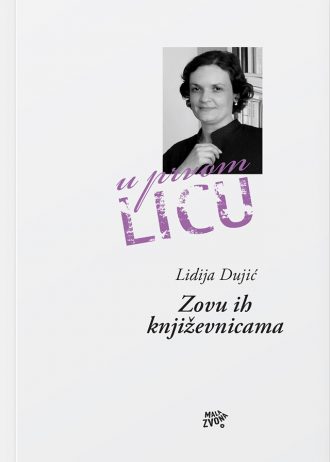
This study in literary history brings to light various characteristics of the Croatian female literary scene in the late 19th and early 20th century. Focusing on three key figures – Dragojla Jarnević, Jagoda Truhelka and Ivana Brlić Mažuranić – the author makes visible a complex tissue of influences, shared existential preoccupations, positions on writing and recurrent literary motifs. The fundamental question leading her research – what was it like to be a female writer in a period where writing was still largely attributed to a male intellect? – thus gets a rich answer that tries to restore justice to silenced female voices. As the area of Croatian female literature is still largely unexplored, Dujić’s study presents an almost pioneering work that brings the reader not only a historical analysis, but also excerpts from previously unpublished archive materials: letters, diaries and personal notes by the three great writers around whom this book revolves.