• 0 Knjige - 0,00 
    • Košarica je prazna.

Serna and Mack in Pursuit of the Frightened Month

15,00  9,00 

In his first prose text the young author uses patterns of traditional storytelling to speak about the contemporary problem of climate change. January disappeared, frightened by the absence of winter; a girl and a household spirit set off on a journey through the world of calendar, trying to find him and persuade him to come back. Adroitly following the spirit of the text, the illustrator uses elements from traditional book illustration, blending them with modern technique and expression.


Book #3348

Letters for Everyone

15,00  9,00 

This playful and cheerful book is perfect for those learning to read as well as for those who are helping them in this endeavor. Every of thirty very short stories – in which numerous characters, both human and animal, appear – is dominated by one single letter. This letter can be searched for, with ears or eyes, and every story can be continued. This unique spelling book invites the reader to play whereby it turns gaining reading habits into an easy and fun project.

Darklets

15,00  9,00 

In this picture book Croatian author Igor Rajki, winner of the prestigious Grigor Vitez award and the award of the Fairy tale festival of Ogulin, deals with a contemporary issue – the issue of the excessive presence of electronic devices and their screens in our everyday life. He does this in an original way, using his distinctive imaginative poetic language, kindling the readers’ imagination and making them think at the same time. The narrator of the story is giving, as if he were a professor of some kind, a lesson about ‘assembling of darkness in the dark’ – an enchanting phenomenon that occurs at the end of the day, in closed spaces, when darkness begins to descend from the ceiling and rise from the floor; the two darknesses embrace each other and slowly turn into the thick dark. But that is not all; during their game they create small sprouts, so called darklets. Darklets playfully twirl around objects, taming their shapes and leaving no trace. But when various screens start to interfere, a problem occurs: grayish shadows appear where darklets should be… The literary story about darklets is narrated in another, visual language by Klasja Habjan, a young illustrator and designer. She creates impressive, secretive life in spaces on the edge between night and day, spaces inhabited by fleeting human and animal figures, fragments of objects and fragments of their interactions; she does this with extraordinary inventiveness, on a very high aesthetic level, making this book attractive not only for reading but also for (repeated) viewing. By offering the youngest readers an utterly unusual visual experience, Klasja Habjan broadens the concept of what a picture book can be, and opens up the space of children’s book for new ways of artistic expression.

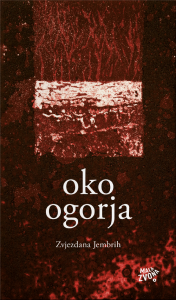
Around Ogorje

15,00  9,00 

In Zvjezdana Jembrih’s third poetry collection all the potentials of her writing merge and come to full expression. Inspired by the specific space, a village in the Split hinterland, the author creates a series of impressive records, reaching a rare level of literary quality. Details from the chosen environment become triggers for surprising images in which the near and the far, the real and the unreal mix, with not even a shadow of sentimentality or commonplace thinking. The poems gathered in this book were created over several years, by slow distillation of the essentials. The result of this process captivates with the range of poetic imagination, the purity and consistency of the concept, the harmonious blending of direct observation, unobtrusive erudition and the ability to translate into a unique language the emotions stirred by different aspects of a (neglected) landscape and its inhabitants.

Monsters

15,00  9,00 

Lili loves colours. Everything around her is always colourful. Her room, her drawings, her clothes, her thoughts. Until one Monday, when Lili loses in a race and nothing can help her feel better. One by one, monsters come and steal colours out of her life, leaving her in a sombre world as she deals with disappointment and sadness. But Lili will find out that, even though it does not always seem so, colours have a way of finding their way back into our lives – with a little help from our friends. An important story told in a simple yet effective way, with gorgeous illustrations by award-winning artist Klasja Habjan.

Why Bach Said Ah

15,00  9,00 

Vesna Matana Matić, an experienced musician with pedagogical experience, in her playful fantasy on the subject of classical music and modern technology, conjures up the great composer surrounded by his numerous children. Children’s cries, laughter and insistent questions are the lively background against which Johann Sebastian’s works are created – until the moment when the composer calls for help from the future, so that he can work in peace. Help does indeed arrive, in the form of a little girl, Selfiene, who gives Bach’s children smartphones. A silence ensues in which no one even notices the house cat any more. But this silence is not in the least stimulating: the melodies in the composer’s head have also fallen silent… This picture book is designed so that the youngest readers can learn something about classical music in a fun way, but also to reflect on the changes that electronic devices have brought to family life. The text is accompanied by imaginative illustrations by the young artist Doria Jantolić.

#openwindow

15,00 

This collection of short texts enitled “#openwindow” is an outstanding example of how high-quality and original literature can be created on social media. For a year, author Aida Bagić wrote morning notes while looking out the window in her bedroom and published them on social media, with accompanying photographs. This project was called #openwindow, and resulted in a variety of texts – prose and poetry fragments, comments on daily events, notes on dreams and memories, wordplay and sketches of fairy tales. Often meditative, sometimes factual or playful, they reveal that the author is a skilled writer with an experience in writing poetry. Collected in this book, these notes show how an everyday object can stimulate our imagination, reflection, and introspection. Created in front of a window that opens onto external landscapes, they outline the author’s world of thought and emotion as a unique and interesting inner landscape. These texts are also an invitation to readers to think about their own everyday life, about ways in which they could rethink it so that it is not only more bearable, but also a source of genuine curiosity, sometimes even joy.

Goat-Foot

15,00 

This story about a fairy is inspired by real-life experience. Its author Mirjana Mrkela speaks about loneliness and feelings of rejection, common in the lives of people who seem different from the majority. As a person who lost her sight in adulthood, the author easily sympathizes with people who are rejected or marginalized in our society for whatever reason. She tells her story as a fairy tale, drawing on certain elements from Slavic mythology. Her heroine, a fairy who, having stepped into the realm of some kind of evil old magic, becomes a goat, retreats from people who do not accept her. She hides in a mountain world of plants and animals and grieves there. But the moon and the sun are there for her, as well as for all other beings. The moon encourages her with its shine, and the sun makes her strong and calm. The pale fairy represents all those who long for understanding and acceptance. The author created the picture book in close collaboration with Katarina Radošević Galić, a Croatian illustrator and scenographer.

The Sneering Bird

16,00  9,60 

Illustrating a fable about a parrot run away from the ZOO who meets various animals and finds all of them for some reason ridiculous until a fox teaches it a lesson, the artist Ivana Pipal finds ingenious ways of representing basically the same situation: the parrot and another animal. Giving each protagonist mood and personality, and creating at the same time deeply pleasant green world of the woods, she turns the tale about understanding and accepting others into rich visual pleasure.


Book #3396


Deceptions and Spectres

16,00  9,60 
Book #3399

Ema is Alone

16,00  9,60 

The story about Ema – written by Vanja Marković, an expert in inclusive and social pedagogy – deals with an important topic of our time: the way people perceive each other. Roaming the streets of her hometown, the little heroine is trying to find someone to play with. She encounters a whole bunch of various characters, but they notice only her looks – her shaggy hair, her huge eyes, her dirty jacket. They all nag her and none of them wants to follow her imagination, but her ideas for games remain on pages, as possibilities for readers themselves to develop. In the end even Ema repeats the pattern that surrounds her: when a yellow cat asks her to play with it she refuses the invitation, thinking that a black cat would be much more interesting. In a playful way the story opens the readers’ eyes to the wrongs implied in superficial ways of looking at others. The storyteller’s style is simple and flowing, very well adapted to the target group of readers (6-8). The illustrations by Vibor Juhas complement and enrich the text; they are close to the aesthetics of comic books and full of little visual surprises.

The Creepy House

16,00  9,60 

The Creepy House is a skilful blend of a story about a family intending to move from the city to an old house surrounded by nature, an old-fashioned game of riddles, and fairy-tale elements that lend the whole book an air of fantasy that children find so irresistible. Solving the riddles given to them by the mysterious voice from the fireplace, Florijan and Klara explore the house and the garden, noticing so many things they did not see at first. With a bit of fear and lots of laughter, they experience a real adventure in search of a key they will use to ‘unlock’ the magic of their future home… The author shows a very good understanding of a child’s way of thinking and combines an imaginative plot with a subtle educational element about the world of plants and animals. The illustrator follows the story closely, complementing it with a number of small artistic surprises.

Windwalk

16,00  9,60 

At first glance, this unusual picture book seems to be entirely dedicated to the endless diversity of winds. But in fact, it questions the ways in which people experience and describe the world. The main character of the story, Tanja the Windwalker, initially performs her job in accordance with the rules and expectations of the wind observation service. However, over time, this passionate wind lover is no longer satisfied with the ordinary language of official reports; she begins to write differently – more personally and poetically, and it takes her more time to formulate sentences. At the same time, various wind officials find it increasingly difficult to understand her… The author of the text, Igor Rajki, conjures up Tanja’s experiences in the worlds of wind and language with strange new coinages and quirky puns, while the illustrator Klasja Habjan creates an imaginative visual world in harmony with the story.

Jezikova juha / Tongue Soup

16,00 

The old cake lady is gone!
Roses aren’t blooming for me!
His axe struck honey!

Visual artist Petra Balekić interprets in her own way – using images and words – just some of the  many coluorful expressions often heard in spoken Croatian. For those who know the language will be reminded od them and have a laugh, while those who don’t will be amazed and learn them with the help of the English translations – and thus avoid getting “tongue soup” for being ignorant.

A Handful of Night Journeys

16,00  9,60 

The fourth poetry book by the young award-winning poet Josip Čekolj takes the reader on unexpected journeys through literary worlds. On the nocturnal reading and writing paths, poems in the form of acrostics are created. For these, the poet chooses the first sentences from novels that in some way marked his childhood and youth. In this way, he creates an original dialogue between poetry and prose, erasing the boundaries between older and contemporary literature and between works for children and adults. The diversity of poetic images in this little linguistic masterpiece does not contradict the unity of the whole, which is based on a kind of substrate of the author’s reflection on the world. Acting in the dual role of reader and writer, Čekolj creates verses that spring from personal memories and experiences, resonating with broader social and political problems. The collection is full of strange stylistic figures and unusual syntactic turns, which on the one hand consistently maintain the concept of an acrostic, and on the other reflect the author’s imaginative and creative freedom. With its sense of rhythm and sonority of language, “A Handful of Night Journeys” builds on Čekolj’s previous books, but it also opens up a new poetic direction along the tracks of lyrical language – a conceptually well-thought-out and stylistically rounded work that captivates with its freshness and layered vision.