-
 Feminine Side of the Croatian Literature
× 1
Feminine Side of the Croatian Literature
× 114,00 €8,40 €
Ukupno : 8,40 €

 Feminine Side of the Croatian Literature
Ukupno : 8,40 €

13,00 € 7,80 €
A collection of short stories by Virgina Woolf, first time in Croatian translation.
Translated by Sanja Lovrenčić
Kikop Award for the best literary translation in 2012.
Format: 13×20
ISBN: 978-953-7760-25-0
Pages: 156
Binding: paperback
Published: 2012.
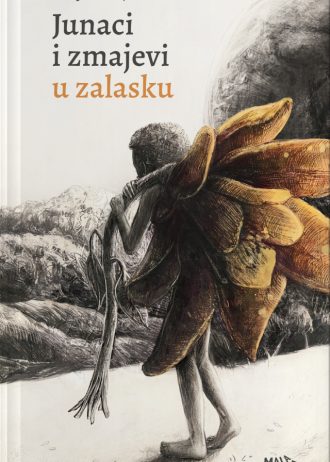
Imagination and a certain freedom in his relation to language as well as an authentic poetical experience characterize Josip Čekolj’s first poetry collection. In four parts – four zeals – the lyrical voice of this young and talented author celebrates the novelty of his first worlds, from the home region, both in a concrete and a symbolic form, to the world of family and first loves. The magic of these poems mostly arises from the peculiar shifts from real to surreal, from bright images that depict an underlying emotion. The author builds his space of words, a space that is built from moments he has experienced. This space is often related to motives that originate in nature and in traditional culture, but it is consistently original, full of surprises and freshness.
Biljana Romić, born in 1960, is a Croatian indologist and cultural editor. She gained her Master of Arts title in 1997 in Zagreb, with a study of Bharati Mukherjee and postcolonial migrant faiths. She has ever since actively been researching and writing about postcolonialism and the notion of the Other. Her extensive study The women’s world of British India was written after she spent several years studying diaries and letters written by “memsahibs”. Her work is not simply a historical overview of their lives and roles during colonialism, it puts colonial history, literature and the notion of the “Other” in a contemporary critical context; Romić analyses over one hundred and fifty sources, including Indrani Sen, Amandeep Kaur, Kumari Jayawardena and Shashi Tharoor. When reading about the British colonial venture in India, we mostly encounter works that have been written from the male perspective of conquests and regimen – but colonial women have, almost from the very beginning, been a part of this venture. Biljana Romić’s book brings us the voices of these women and their lives. They journeyed into the unknown, often not prepared for the adversities of a different climate and the social roles they were going to find themselves in. They went into the unknown as wives, governesses, teachers, as young women in search of a husband; sometimes as entrepreneurs, missionaries, adventurers. Many stayed within the expected roles given by the British colonial community, but some of them showed that it is possible to overcome the limitations of their era, class and gender when it comes to their relation to India and Indians. Biljana Romić talks about the so-called “little history”, the one that appears on the margins of big historical events – and without which it is impossible to gain a complete picture of a time that has passed.
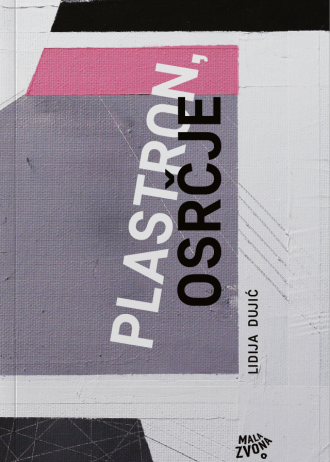
The third book of poetry by Lidija Dujić, Plastron, Pericardium, includes five cycles of poems: Growers of Ice, The Time of the Desert, A Plate of High Tide, Wagon Tracks and Crop Rotation and Bunker of Angels. It is a poetry full of daring images, unusual associative sequences, rich with references to various fields of human experience. Combining elements from different language levels, the (erudite) author shapes and produces her poetic reality, with its own optics and artistic logic.
The fourth poetry book by the young award-winning poet Josip Čekolj takes the reader on unexpected journeys through literary worlds. On the nocturnal reading and writing paths, poems in the form of acrostics are created. For these, the poet chooses the first sentences from novels that in some way marked his childhood and youth. In this way, he creates an original dialogue between poetry and prose, erasing the boundaries between older and contemporary literature and between works for children and adults. The diversity of poetic images in this little linguistic masterpiece does not contradict the unity of the whole, which is based on a kind of substrate of the author’s reflection on the world. Acting in the dual role of reader and writer, Čekolj creates verses that spring from personal memories and experiences, resonating with broader social and political problems. The collection is full of strange stylistic figures and unusual syntactic turns, which on the one hand consistently maintain the concept of an acrostic, and on the other reflect the author’s imaginative and creative freedom. With its sense of rhythm and sonority of language, “A Handful of Night Journeys” builds on Čekolj’s previous books, but it also opens up a new poetic direction along the tracks of lyrical language – a conceptually well-thought-out and stylistically rounded work that captivates with its freshness and layered vision.