-
 Self-Portrait in the Study
15,00 € × 1
Self-Portrait in the Study
15,00 € × 1
Ukupno : 15,00 €

 Self-Portrait in the Study
15,00 € × 1
Self-Portrait in the Study
15,00 € × 1 Ukupno : 15,00 €
11,00 €
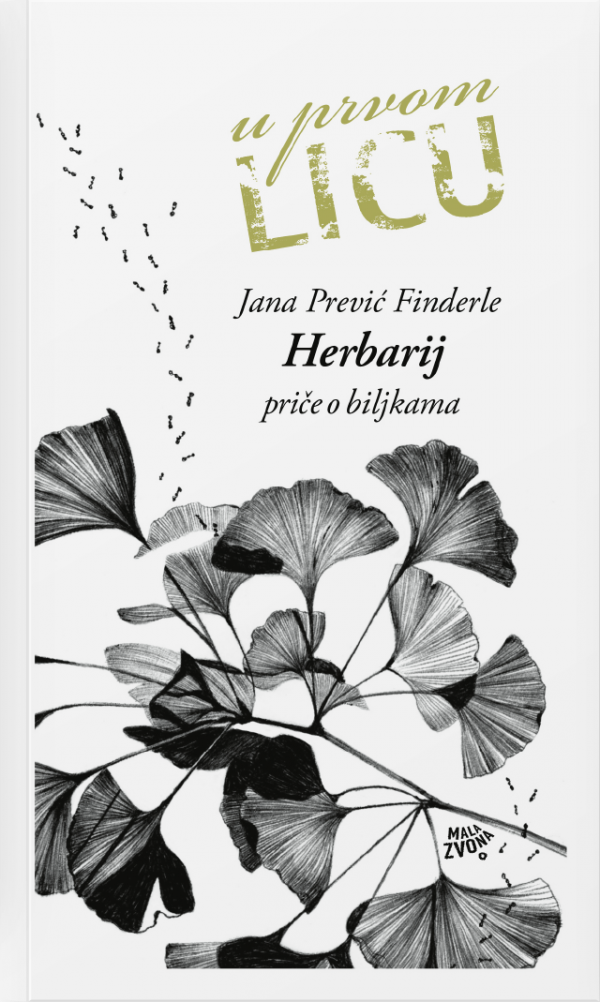
Jana Prević Finderle’s “Herbarium” could both be seen as a follow-up to her debut “The travertine bridge”, published in 2019, and its sheer opposite. One could argue that it’s a follow-up, because it is a book of short prose inspired by the author’s own experiences, delivered in a simple and direct way – and that it’s an opposite, as “The travertine bridge” was dedicated to travels and encounters, a horizontal motion through space, while “Herbarium”, a book about the lives of plants and the people closest to the author, focuses on travelling vertically, through time. For every herbarium, including Jana’s, is a book of memories. It seems that we live in times of increased sensitivity for the green world that surrounds us, a world that is getting more endangered with every day. But Jana’s soft spot for plantlife isn’t a result of any trend, although the need to create a herbarium made of words could have been influenced by the increasing eco-awareness in times of global warming. This author has, since early childhood, been living her life in close connection to plantlife, which enables her to talk about it from a personal, almost lyrical, perspective. Her authentic language depicts a simple closeness. The focus doesn’t lie on a problem or on the author’s knowledge of botany – which she clearly has – but rather on her personal experiences, her discoveries, little miracles she encounters, like the ones where her aunt Mirjana, in Jana’s adolescent days of spleen, tells her about an acorn and an oak.
Format: 11×20
ISBN: 978-953-8313-52-3
Number of pages: 105
Paperback
Published: 2022.
Over the last few decades Walter Benjamin has become one of the most prominent names in the humanities: considering definitions of modernity, film theory, philosophy of history, cultural studies or criticism of canonical literary texts, his work can hardly be avoided. This is brought about by Benjamin’s broad interests and lucidity, but also by his awareness of the fact that cultural theory or philosophy always implies an act of writing. His penchant towards the use of metaphor, image, allusion rather than systematical argumentation and his insistence on a purified stile rather than a strict composition make Benjamin’s texts – that always place themselves between philosophy and literature – a field of knowledge that never allows an unambiguous interpretation. In his Berlin Childhood around 1900 the dominant element is precisely this ‘surplus’ of literature; applying an autobiographical discourse, Benjamin creates a lyrical picture of his childhood in a rich bourgeois family from Berlin. Nevertheless, this seemingly personal thematic becomes a historically relevant document that bears witness to the life and culture of the big city, evoking a great number of social and philosophical issues: the constitution of subject through memory, the shadow of class struggle, the possibility of objective historical representation, the relation between modernism and messianism. Starting from a specific literary genre, Berlin Childhood around 1900 amplifies the tension between philosophy and literature, the tension that makes them both possible: thus Benjamin anticipates some of the most important themes and techniques of post-structuralism, and stays as modern as ever.
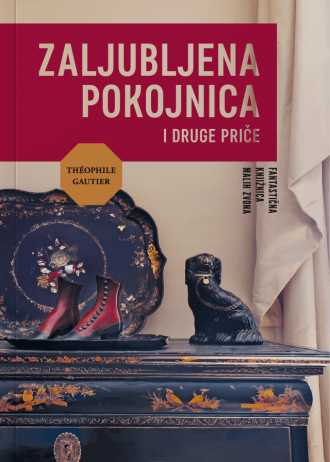
A selection of fantastic short stories by the French classic Théophile Gautier, in Croatian translation.
“In the Rhythm of Horror – The Abyss of Dances” is a collection of six fantasy stories by young Croatian authors. The stories were chosen via a competition that Mala zvona held in 2020, after which authors Josip Čekolj, Mateja Pavlic, Marin Pelaić, Ines Vajzović, Martina Vidaić and Orin Ivan Vrkaš were chosen. Except for the characteristic fantastical elements of the unexpected and wondrous, the motive of dance also connects the stories – a dance of the dead and the arisen, a dance of half-humans and half-animals in the moonlight, an oriental dance of wraiths in black capes. These obnoxious dancers contribute to an uneasy atmosphere but at the same time, they create an aura of mystical beauty. Each story is illustrated with a black and white piece by Klara Rusan Klarxy – her work masterly depicts the merge of the real and the otherworldly, and makes a world that might seem dark and bizarre mysteriously alluring.
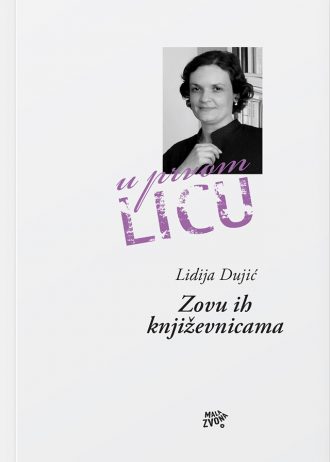
This study in literary history brings to light various characteristics of the Croatian female literary scene in the late 19th and early 20th century. Focusing on three key figures – Dragojla Jarnević, Jagoda Truhelka and Ivana Brlić Mažuranić – the author makes visible a complex tissue of influences, shared existential preoccupations, positions on writing and recurrent literary motifs. The fundamental question leading her research – what was it like to be a female writer in a period where writing was still largely attributed to a male intellect? – thus gets a rich answer that tries to restore justice to silenced female voices. As the area of Croatian female literature is still largely unexplored, Dujić’s study presents an almost pioneering work that brings the reader not only a historical analysis, but also excerpts from previously unpublished archive materials: letters, diaries and personal notes by the three great writers around whom this book revolves.