Format: 11×20
ISBN: 978-953-8313-52-3
Number of pages: 105
Paperback
Published: 2022.
“La Morte Amoureuse” and Other Stories
12,00 €A selection of fantastic short stories by the French classic Théophile Gautier, in Croatian translation.
11,00 €
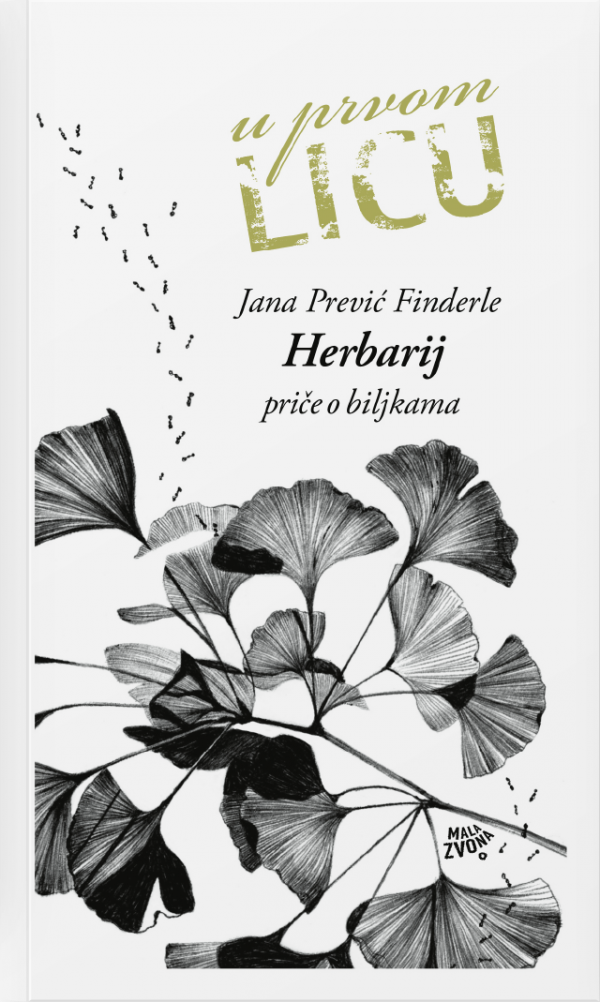
Jana Prević Finderle’s “Herbarium” could both be seen as a follow-up to her debut “The travertine bridge”, published in 2019, and its sheer opposite. One could argue that it’s a follow-up, because it is a book of short prose inspired by the author’s own experiences, delivered in a simple and direct way – and that it’s an opposite, as “The travertine bridge” was dedicated to travels and encounters, a horizontal motion through space, while “Herbarium”, a book about the lives of plants and the people closest to the author, focuses on travelling vertically, through time. For every herbarium, including Jana’s, is a book of memories. It seems that we live in times of increased sensitivity for the green world that surrounds us, a world that is getting more endangered with every day. But Jana’s soft spot for plantlife isn’t a result of any trend, although the need to create a herbarium made of words could have been influenced by the increasing eco-awareness in times of global warming. This author has, since early childhood, been living her life in close connection to plantlife, which enables her to talk about it from a personal, almost lyrical, perspective. Her authentic language depicts a simple closeness. The focus doesn’t lie on a problem or on the author’s knowledge of botany – which she clearly has – but rather on her personal experiences, her discoveries, little miracles she encounters, like the ones where her aunt Mirjana, in Jana’s adolescent days of spleen, tells her about an acorn and an oak.

Format: 11×20
ISBN: 978-953-8313-52-3
Number of pages: 105
Paperback
Published: 2022.
A selection of fantastic short stories by the French classic Théophile Gautier, in Croatian translation.
The edition that will thrill every classical music lover! The year is 1840, in the city of Leipzig; the young but already internationally famous pianist Clara Wieck and the still quite unknown composer Robert Schumann just succeeded in getting married, despite various obstacles. The day after the wedding, upon Robert’s whish, they start writing down all their needs and desires, joys and sorrows of matrimonial life. They take turns in writing, each of them covering the events of one week, at first with a lot of passion. Many celebrated musicians of the period pass through the pages of their double diary; Robert and Clara speak about art, home concerts, days and weeks filled with music, but they also speak about love. In these first years of their marriage, years that have been among the most productive for Robert and a sort of setback for Clara, life is good, but it isn’t without its’ own shadows…
“In the Rhythm of Horror – The Abyss of Dances” is a collection of six fantasy stories by young Croatian authors. The stories were chosen via a competition that Mala zvona held in 2020, after which authors Josip Čekolj, Mateja Pavlic, Marin Pelaić, Ines Vajzović, Martina Vidaić and Orin Ivan Vrkaš were chosen. Except for the characteristic fantastical elements of the unexpected and wondrous, the motive of dance also connects the stories – a dance of the dead and the arisen, a dance of half-humans and half-animals in the moonlight, an oriental dance of wraiths in black capes. These obnoxious dancers contribute to an uneasy atmosphere but at the same time, they create an aura of mystical beauty. Each story is illustrated with a black and white piece by Klara Rusan Klarxy – her work masterly depicts the merge of the real and the otherworldly, and makes a world that might seem dark and bizarre mysteriously alluring.
Mala zvona is proud to present the first Croatian translation of a selection of stories from Giambattista Basile’s famousTale of Tales (Lo cunto de li cunti or Il Pentamerone)
Basile’s collection, written in the 17th century in Neapolitan dialect, served as an inspiration to numerous fairy tale writers over the centuries; Basile’s motifs can be traced through many famous collections, such as those written by Perrault or the brothers Grimm.
In these grotesque stories – which are by no means intended for children – Basile teaches the reader about virtue, vice, deception and love while using a flamboyant Baroque rhetoric. Our selection includes the following stories: The Enchanted Doe, The Flea and The Old Woman Who Was Skinned who were also used as a pretext for Matteo Garrone’s multiple award-winning movie Il racconto dei racconti.