Format: 13,5×20,5
ISBN: 978-953-7760-01-4
Pages: 160
Binding: paperback
Published: 2010.


10,00 € 6,00 €
Diaries by the famous Croatian writer Ivana Brlić Mažuranić, written in the 1880s when she was fifteen to eighteen years old. The book provides insight into teenage life in the 19th century in Zagreb, the charming young character of the writer, her thoughts on literature, life and death, as well as the seeds of conflicts awaiting a female writer – all of which makes it a highly interesting read.
Format: 13,5×20,5
ISBN: 978-953-7760-01-4
Pages: 160
Binding: paperback
Published: 2010.
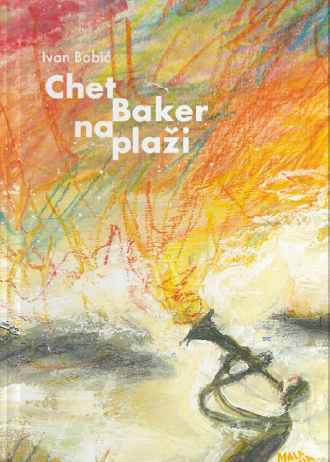
In the new poetry book by the acclaimed and award-winning Croatian poet Ivan Babić, “Chet Baker on the Beach”, the readers will notice, on the one hand, the maturity, clarity of concept and stylistic certainty of this experienced writer, and on the other hand his talent for a short form that unites the lyrical and the meditative, and within which the author manages to transform elements of sensory, organic reality into imaginative metaphor. The dominant thematic framework of these subtle poems is love. The foreboding of opening up to another person, the fragility of closeness, unrest, hope and absence alternate like musical variations in a book that is, as the title already testifies, inspired and imbued with music. Music is, however, most present in the poems of the central, titular cycle, where it appears in a multiple role – as an incentive for language, as a possibility of dialogue across the barriers that separate different artistic disciplines, as an embodiment of psychological states and moods. Breath and respiration run through the manuscript as an organic link between music and song, but also as the presence of the living world of nature for which the author shows a special sensitivity (noted in his previous collections). Babić’s sense of language is manifested in lexical abundance, a flexible sentence that manages to remain light despite its complexity, an imaginative but unobtrusive creation of neologisms, and the ability to create a small, concise and rounded whole with well-chosen words.
Imagination and a certain freedom in his relation to language as well as an authentic poetical experience characterize Josip Čekolj’s first poetry collection. In four parts – four zeals – the lyrical voice of this young and talented author celebrates the novelty of his first worlds, from the home region, both in a concrete and a symbolic form, to the world of family and first loves. The magic of these poems mostly arises from the peculiar shifts from real to surreal, from bright images that depict an underlying emotion. The author builds his space of words, a space that is built from moments he has experienced. This space is often related to motives that originate in nature and in traditional culture, but it is consistently original, full of surprises and freshness.
The fourth poetry book by the young award-winning poet Josip Čekolj takes the reader on unexpected journeys through literary worlds. On the nocturnal reading and writing paths, poems in the form of acrostics are created. For these, the poet chooses the first sentences from novels that in some way marked his childhood and youth. In this way, he creates an original dialogue between poetry and prose, erasing the boundaries between older and contemporary literature and between works for children and adults. The diversity of poetic images in this little linguistic masterpiece does not contradict the unity of the whole, which is based on a kind of substrate of the author’s reflection on the world. Acting in the dual role of reader and writer, Čekolj creates verses that spring from personal memories and experiences, resonating with broader social and political problems. The collection is full of strange stylistic figures and unusual syntactic turns, which on the one hand consistently maintain the concept of an acrostic, and on the other reflect the author’s imaginative and creative freedom. With its sense of rhythm and sonority of language, “A Handful of Night Journeys” builds on Čekolj’s previous books, but it also opens up a new poetic direction along the tracks of lyrical language – a conceptually well-thought-out and stylistically rounded work that captivates with its freshness and layered vision.
This prose-poetry reader could prove to be one of the key events of the Anglo-Croatian literary exchange in 2025: in it, translator and poet Goran Čolakhodžić brings a selection of prose and verse by the English early modernist, Edward Thomas, one of the most important voices of British poetry and of the generation of artists who perished in the Great War, and a close friend of the American classic Robert Frost. The rhythms of his verse are quiet and unobtrusive; he was above all a poet of the earth, trees, birds, and the human relationship with nature, but his poetry is also characterized by subtle psychological insights and is overshadowed by the coming world conflict. In addition to tackling Thomas’s rhymed verse and selecting some of the most successful fragments from Thomas’s nature writing, travel journals and articles, Čolakhodžić also wrote a critical preface, notes and his own artistic text juxtaposed with Thomas’s – a diary of the arrival of spring in Zagreb in 2025, which highlights the similarities and differences between England and Croatia, the 19th and 21st centuries, reminding us of the impact that climate change and people’s problematic relationship with nature have on our daily life. The painter Iva Valentić provided stunning artistic responses to the texts collected here, connecting Far Eastern techniques with Western literature.