-
 Notes from the Source, Questions for Later
21,00 € × 1
Notes from the Source, Questions for Later
21,00 € × 1
Ukupno : 21,00 €

 Notes from the Source, Questions for Later
21,00 € × 1
Notes from the Source, Questions for Later
21,00 € × 1 Ukupno : 21,00 €

10,00 €
Diaries by the famous Croatian writer Ivana Brlić Mažuranić, written in the 1880s when she was fifteen to eighteen years old. The book provides insight into teenage life in the 19th century in Zagreb, the charming young character of the writer, her thoughts on literature, life and death, as well as the seeds of conflicts awaiting a female writer – all of which makes it a highly interesting read.
Format: 13,5×20,5
ISBN: 978-953-7760-01-4
Pages: 160
Binding: paperback
Published: 2010.
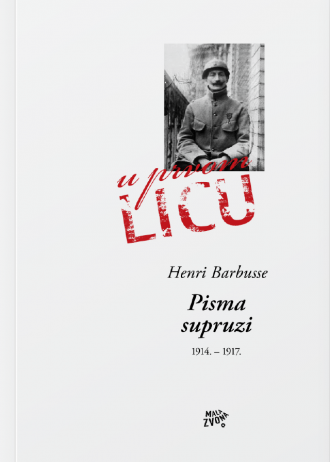
My dearr heart, my lovely little one – thus begin the gentle letters Henri Barbusse wrote to his wife a hundred years ago. What follows is by no means gentle – trenches, shells, mud and the dead, the war that is revealed in its bloody meaninglessness. In the year 1914. the writer of letters, Henri Barbusse, was 41, had a reputation as a writer and editor, was not in the best health and had firm pacifist beliefs. Despite all this he volunteered for the French Army and spent the two first years of war on the front lines – and wrote his novel Under Fire, literary testimony of the World War I, which earned him the Goncourt prize and thousands of readers. Documentary material on which is based his novel is found in the letters he wrote almost daily to his wife Hélyonne. In their immediacy and authenticity, those letters can convey to the reader of today the drama of the beginning of the “short twentieth century” better than any fiction.
This collection of short texts enitled “#openwindow” is an outstanding example of how high-quality and original literature can be created on social media. For a year, author Aida Bagić wrote morning notes while looking out the window in her bedroom and published them on social media, with accompanying photographs. This project was called #openwindow, and resulted in a variety of texts – prose and poetry fragments, comments on daily events, notes on dreams and memories, wordplay and sketches of fairy tales. Often meditative, sometimes factual or playful, they reveal that the author is a skilled writer with an experience in writing poetry. Collected in this book, these notes show how an everyday object can stimulate our imagination, reflection, and introspection. Created in front of a window that opens onto external landscapes, they outline the author’s world of thought and emotion as a unique and interesting inner landscape. These texts are also an invitation to readers to think about their own everyday life, about ways in which they could rethink it so that it is not only more bearable, but also a source of genuine curiosity, sometimes even joy.
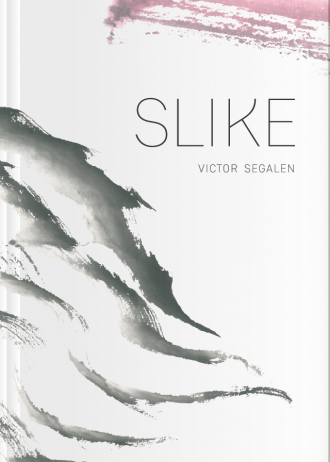
Paintings, a collection of prose poems, brings Segalen’s descriptions of imaginary Chinese visual art: thereby a dialogue is opened not only between different cultures, but also between different artistic media. The reader wanders around these foreign, strange places, sometimes lost, sometimes amazed but is always lead forwards by Segalen’s virtuoso writing.
Mala zvona brings the first integral Croatian translation of this poetic masterpiece.
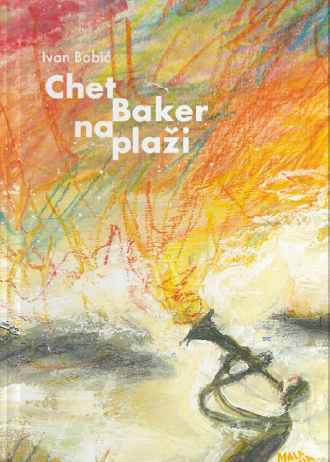
In the new poetry book by the acclaimed and award-winning Croatian poet Ivan Babić, “Chet Baker on the Beach”, the readers will notice, on the one hand, the maturity, clarity of concept and stylistic certainty of this experienced writer, and on the other hand his talent for a short form that unites the lyrical and the meditative, and within which the author manages to transform elements of sensory, organic reality into imaginative metaphor. The dominant thematic framework of these subtle poems is love. The foreboding of opening up to another person, the fragility of closeness, unrest, hope and absence alternate like musical variations in a book that is, as the title already testifies, inspired and imbued with music. Music is, however, most present in the poems of the central, titular cycle, where it appears in a multiple role – as an incentive for language, as a possibility of dialogue across the barriers that separate different artistic disciplines, as an embodiment of psychological states and moods. Breath and respiration run through the manuscript as an organic link between music and song, but also as the presence of the living world of nature for which the author shows a special sensitivity (noted in his previous collections). Babić’s sense of language is manifested in lexical abundance, a flexible sentence that manages to remain light despite its complexity, an imaginative but unobtrusive creation of neologisms, and the ability to create a small, concise and rounded whole with well-chosen words.