-
 #openwindow
15,00 € × 1
#openwindow
15,00 € × 1
Ukupno : 15,00 €

 #openwindow
15,00 € × 1
#openwindow
15,00 € × 1 Ukupno : 15,00 €
17,00 €
A book on Frederic Chopin written by his colleague and friend Franz Liszt. Croatian translation of the first French edition. Preface by pianist Veljko Glodić, professor at the Music Academy in Zagreb.
Format: 13,50×20,5
ISBN: 978-953-7760-12-0
Pages: 180
Binding: paperback
Published: 2011.
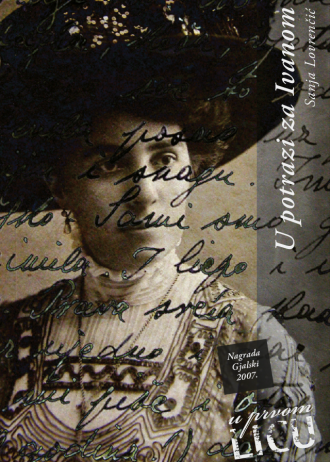
A biographical novel by Sanja Lovrenčić about the Croatian author Ivana Brlić Mažuranić. Written in the first-person singular, the story develops on two levels, in the past and in the present, unfolding around the changing and yet unchanging topics of family relations, artistic creation and female existence in the world of literature.
“K.Š.Gjalski” Award for the best Croatian novel in 2007.
The fourth poetry book by the young award-winning poet Josip Čekolj takes the reader on unexpected journeys through literary worlds. On the nocturnal reading and writing paths, poems in the form of acrostics are created. For these, the poet chooses the first sentences from novels that in some way marked his childhood and youth. In this way, he creates an original dialogue between poetry and prose, erasing the boundaries between older and contemporary literature and between works for children and adults. The diversity of poetic images in this little linguistic masterpiece does not contradict the unity of the whole, which is based on a kind of substrate of the author’s reflection on the world. Acting in the dual role of reader and writer, Čekolj creates verses that spring from personal memories and experiences, resonating with broader social and political problems. The collection is full of strange stylistic figures and unusual syntactic turns, which on the one hand consistently maintain the concept of an acrostic, and on the other reflect the author’s imaginative and creative freedom. With its sense of rhythm and sonority of language, “A Handful of Night Journeys” builds on Čekolj’s previous books, but it also opens up a new poetic direction along the tracks of lyrical language – a conceptually well-thought-out and stylistically rounded work that captivates with its freshness and layered vision.
Imagination and a certain freedom in his relation to language as well as an authentic poetical experience characterize Josip Čekolj’s first poetry collection. In four parts – four zeals – the lyrical voice of this young and talented author celebrates the novelty of his first worlds, from the home region, both in a concrete and a symbolic form, to the world of family and first loves. The magic of these poems mostly arises from the peculiar shifts from real to surreal, from bright images that depict an underlying emotion. The author builds his space of words, a space that is built from moments he has experienced. This space is often related to motives that originate in nature and in traditional culture, but it is consistently original, full of surprises and freshness.
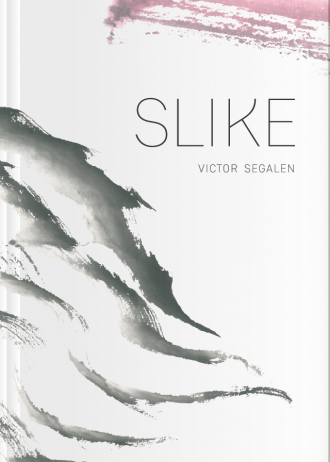
Paintings, a collection of prose poems, brings Segalen’s descriptions of imaginary Chinese visual art: thereby a dialogue is opened not only between different cultures, but also between different artistic media. The reader wanders around these foreign, strange places, sometimes lost, sometimes amazed but is always lead forwards by Segalen’s virtuoso writing.
Mala zvona brings the first integral Croatian translation of this poetic masterpiece.