Autor/ica

Sanja Lovrenčić

Sanja Lovrenčić was born in 1961 in Knin (Croatia). Since her earliest childhood she has lived in Zagreb, where she finished elementary school, classical grammar school and music high school. She studied art history and indology at the Faculty of Philosophy in Zagreb, and graduated art history at the Faculty of Philosophy in Belgrade (1985). She began writing poetry and translating it from French and English during her studies; her first poems were published in the magazine Quorum, and she self-published her first collection of poems Insula dulcamara in 1987. In the late eighties she submitted her work for the first time to a public competition for a radio drama. After 1990 – having won first prize for both a radio drama and a radio play for children – she closely collaborated for several years with the Drama Programme of Croatian Radio as an author and translator. In 1994 she published two books in two different fields which are equally in the focus of her interest: the collection of poems Scarlet Fabric (edited by Hrvoje Pejaković) and the book of stories for children Esperel, the City of Small Wonders. By 2007 she published four more collections of stories for children (she won the Grigor Vitez Award for The Four Terrible Foof-Eaters) and two short novels, and after that she wrote only texts for picture books. She considers poetry to be the basis of her literary work and her most important field of activity, and she has never stopped writing it.

Her first collection of stories for adult readers, Wien Fantastic, came out in 1998 in the Quorum Collection of the MD Publishing House, which printed several more of her books in prose, mostly of an experimental nature. She published her first longer novel The Skating Rink in 2005. As a member of the Association of artists Autorska kuća (2004-2009), she also became the publisher of some of her own texts. In 2006, she therefore published her biographical novel In Search of Ivana, for which she received the Gjalski Award, and a collection of poems The River Surely Loves the Flood (Cyclops Award). In 2009, the Leykam Publishing House put out her novel Martin’s Strings in Croatian and German, which won the Steiermaerkische Sparkasse Literary Award and was shortlisted for the T-Portal Award.

With her younger son Adrian Pelc, she founded the Mala zvona Publishing House in 2010, in which the majority of her literary and literary translation activities have taken place ever since. However, she continues to collaborate with other publishers and, for example, she published the novel Ardura (2012) in Fraktura. Ardura was shortlisted for two literary awards, and Lovrenčić’s most notable books include the novel Cabinet for Sentimental Trivial Literature (2018) and a collection of poems Sketches for a Heroine (2021). For the manuscript I am Writing to you from a Distant Land she received the Tea Benčić Rimay Award in 2021 for an unpublished collection of prose poems.

Creative writing fellowships:
H.A.L.D. , International Residency for Writers at Hald, Denmark (2014).
Art Omi, USA (2015, 2021)
Villa Marguerite Yourcenar, France (2016)
Château de Lavigny, Switzerland (2017)
Q21 Museumsquartier, Vienna, Austria (2017)

In addition to writing, she does a lot of translation work. Her translated books fall into several groups: social sciences, literature for adults, literature for children, music history; she won the Cyclops Award (2012) for her translation of Virginia Woolf’s collection of short fiction The Haunted House

In 2005, she launched an event to encourage reading Pick a Story! which is since being held continually in several Croatian cities.

Since 2014, she has also been creating ceramic artwork, and has shown her work in several juried group exhibitions. Together with artist Iva Valentić, she founded the Pictogram Art Organisation in 2020, with the aim of creating handmade art books. They jointly exhibited several such cycles, entitled Pictobooks.

Ostali naslovi autora/ice

The Silence of Green

33,00 

Direct contact with nature plays an important role in this little poetic and visual trilogy by two authors, Sanja Lovrenčić and Iva Valentić. Each in her own way, they experience the green worlds – even if those worlds are small, squeezed between concrete and asphalt – as spaces for a silence that is a departure from everyday reality and a prerequisite for creative work. The Silence of Green was originally the title of a series of the authors’ eleven handwritten art books. Connecting the domain of words and the domain of images, they spent several months dealing with urban greenery, transferring the imprints of fragility, diversity, and vitality of urban plants into their hybrid medium. Growing out of this greenery and returning to it again, as a reflection of the life cycle of the plant world, are the calm, contemplative, and questioning verses of Sanja Lovrenčić, as well as the organically flowing illustrations in ink and stamps by Iva Valentić. The authors collected sketches and notes that were made during the period of work on the manuscript books, supplemented them and prepared them for this edition. The trilogy The Silence of Green consists of the volumes Clear Images, Excerpts from a Personal Chronicle and The Silence of Green: The City, all together in a wonderful paper box. It was designed and produced as a bibliophile edition.

A Happy Day in Our Neighbourhood

18,00 

The new picture book by Sanja Lovrenčić and Dominik Vuković follows the journey of a single rose. Passing from hand to hand, the red flower outlines the life of a city neighbourhood through which it is carried by various characters. The neighbourhood is a rich microworld in which chance encounters, small daily rituals and never-ending human dramas take place. The characters that the rose travels among belong to different social groups: from dog walkers, young parents, a shop assistant, a resident of a nursing home and a young artist, to marginalized people such as an elderly homeless man and a street musician. All of them, however, are connected by a simple gesture of kindness: passing the rose from one hand to another. The rose thus becomes a metaphor for the community that permeates the fabric of the city, despite the ever-present differences. Ultimately, this tender flower symbolizes the fragility of every gentle gesture – but also its beauty.

The Little Key

17,00 

Starting from a banal event – a shoe that was untied and a key found on the street – the little heroine of this picture book talks about her loved ones. For each of them, such a key could serve something, unlock something of theirs: mom’s glass showcase, dad’s mysterious drawer, a compartment with love letters in grandma’s cabinet, a friend’s special pencil case, her brother’s box with figurines of dragons and knights. With each contemplation of the key, an image from everyday life is “unlocked”. But in the end, the girl concludes that the key will best serve her and her own imagination.
The author of this story about curiosity is the acclaimed and experienced writer Sanja Lovrenčić, and the book was illustrated by Lucija Mrzljak, an award-winning artist educated in Zagreb, Prague, Krakow and Tallinn.

Meandering with Julije Knifer

18,00 

“Whenever I find something that I like, I want to tell a story about it” , says the narrator of this book. But she will by no means tell the story of Julije Knifer and his famous meander motif alone. The painter himself talks about anti-paintings and anti-bulbs, about the rhythms of black and white, vertical and horizontal lines, research and the search for extremes – all of this in his own words taken from original diary entries. And the illustrations inspired by his art also tell the readers about his journey towards and with meanders in their own way. In the fifth picture book of their Croatian fine art series, Sanja Lovrenčić and Dominik Vuković present the work of one of the most original and respected Croatian artists of the twentieth century, well-recognized abroad.

Croatian Folktales

17,00 

After reading old Croatian folktales in a very serious book for adults,author Sanja Lovrenčić decided to set her favourite ones free and make them more accessible to children of today, telling them in her own literary voice, adjusting them slightly so that they would be more understandable. In eleven short tales, we meet a wide range of interesting heroes and antiheroes, from fox brides and tiny fairies to ravenous young women and mean bunnies. Set in magical and mystical forest settings skillfully depicted by Branka Hollingsworth, these tales – sometimes whimsy, sometimes not – now get to live on in the minds and hearts of new generations of young readers and listeners, saved from the terrible destiny of being forgotten.

Stories for the End of the World (and Other Everyday Trifles)

17,00 

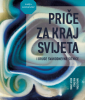
Don’t let the title fool you – in these witty micro-stories the end of the world is happening on an (almost) everyday level and “other trifles” may have an unexpected depth. Miniatures by Sanja Lovrenčić, organized in eight “chapters”, seemingly adapted to the short attention span of a modern reader, take into account things like morning-garbage-squads, polar bear wisdom, exodus of delivery people, time-stay-machines, mythical journeys and metaphorical animals. Sometimes entertaining, sometimes meditative, the author’s voice stays firm in defending the art of painting/playing with words and especially vocal against false/alternative literature that (allegedly) paints reality, media, and politics.  

Red Doves

19,00 

The plot of this novel begins with the female narrator’s arrival on an unnamed Mediterranean island. She has inherited a house in an almost abandoned village and comes to see it; it is a good reason to get away from her daily struggles for a while. The landscape around her is nostalgically idyllic: crumbling stone houses, wild capers, homemade cheese, sunshine and wind. Everything suggests that there, at a distance from people, precarious jobs and urban routine, she’ll find a space for introspection, for facing her past, her desires and hopes. Along with the house, however, the narrator inherited a dovecot with a flock of pigeons bred by her deceased cousin, Toni. When she decides to release them from their prison, she has no idea that these homing birds will soon return to her along with six peculiar guests – Toni’s old friends. They organize a memorial party for him, and during three consecutive evenings they relate fragments of their shared past. Were they an international theater troupe that wandered the Mediterranean small towns in the seventies, or active participants in the political turmoil of the age of lead – it is difficult for the heroine to decide. At the end of the party, before they go away, the strange guests explain the true nature of her newly acquired inheritance: along with the house, she gets the obligation to tell their story, a story she did not fully grasp. And that’s where the Mediterranean idyll comes to an end: it will be replaced by a research into international terrorism in the 1970s, a personal revolt against the clash of wealth and poverty at that time and in the present, growing compassion for non-human living world and growing anger provoked by deadly business practices, cyber-subversions,  anger, fear and escape. To the fragments of her guests’ stories the heroine will react creating her own, a story that she will – when the storm she provoked subsides – almost unintentionally leave as a legacy to the new generation.

Letters for Everyone

15,00 

This playful and cheerful book is perfect for those learning to read as well as for those who are helping them in this endeavor. Every of thirty very short stories – in which numerous characters, both human and animal, appear – is dominated by one single letter. This letter can be searched for, with ears or eyes, and every story can be continued. This unique spelling book invites the reader to play whereby it turns gaining reading habits into an easy and fun project.

Sketching out a Heroine

12,00 

As a poet of proven skills, Sanja Lovrenčić sketches a mysterious heroine. Who is she? After reading, it is up to us to conclude. Or to let her continue to take shape within us for a long time. For, this collection of poems counts on the cooperation of a careful watcher and listener, a curious reader sensitive to language and its beyond. Sanja Lovrenčić invites us on an adventurous poetic journey through the poems/episodes of a very special, never fully expressible or sharply drawn protagonist, with whose joys, doubts, insights and resignations we easily empathise. (Dorta Jagić, ed.)

Longlisted for the Kamov Award 2021

The Fly in the Atelier of Ivan Kožarić

15,00 

How to introduce children to the world of a famous conceptual artist? The author of the text chose a character from the artist’s notebook, a little fly. Accidentally it enters the atelier – where all objects are wrapped in paper (the situation taken from real life). One by one they unwrap themselves for the little fly, telling and singing their stories. The illustrator creates the magical space of the atelier with highly original inventiveness, masterfully inserting citations of Kožarić’s works.


Book #3419

Six Walks of Slava Raškaj

15,00 

This picture-book is the first within a series with which Mala zvona introduces works of great Croatian visual artists to children. The famous Croatian impressionist painter S. Raškaj was deaf – and very sensitive to nature. Therefore, the writer of this picture book chose to represent her life and work in six walks with easel in different surroundings: the garden of her childhood, parks in the city where she learned to paint, winter woods and summer meadows where she made her best pictures. The illustrator did not copy the style of watercolors made by S. Raškaj, but gave the adequate transparence and lightness to his own.


Book #3338


The Cabinet for Sentimental Trivial Literature

12,00 

Shortlisted for the Predrag Matvejević Award 2021, longlisted for the Fric Award 2019 Sanja Lovrenčić’s books draw into her net a reader who is ready for adventure, for whom reading is not merely following a linear plot and a pastime, but recognition and acceptance of a game that, when joined, becomes infinitely meaningful, subtle and even fun. Her new novel, entitled Cabinet for Sentimental Trivial Literature, in which is its set, but which is also an indicative determinant of what will be told, is certainly one of the “more readable” of her novels, i.e. one in which there are no traps for readers, unless they themselves want to fall into them. Also, as is often the case with this author, its structure is built somewhat conceptually, by changing the epistolary form, which makes up the main flow of narration, with inserted stories that form a rounded and meaningful whole it. There has been a crisis in the Cabinet, which is a kind of small, private and non-profit museum that houses the legacy of “sentimental and trivial literature”. The curator, who writes letters to the late founder Rosa, realizes that not only does the Cabinet need a “cash injection”, but also a new guardian to replace him. Since this is not just an ordinary job but also has a specific emotional and, of course, sentimental value, neither is easy to perform, and a job advertisement that includes one of the key sentences of the novel: “Your story is more important to us than your qualifications”, will further complicate matters. (…) Ten candidates apply to the ad that had inadvertently implied that candidates should also be writers, and they bring with them stories about their professional and private lives, sometimes completely bizarre, but also stories that make up an integral part of the novel. While the curator, who is becoming more and more desperate and sceptical, fills letters to Rosa with fragments from his own and the Cabinet’s everyday life, as well as those concerning the past, origin and meaning of her and his museum, an unusual and “soft” legacy that seems to have been run-over by a time of different imperatives  and priorities, the candidates succeed one another before him, with their experiences, but above all with the stories they enclose, enabling the novel to emerge from the closed space of the Cabinet into the outside, towards modernity and its peculiarities and problems. This “opening” – placed in stories within the story – subtly positions the novel towards recent reality, because it indirectly deals with the themes of art and artistic activism, social responsibility, commercialization and the entry of capital into unprofitable spheres of human activity, feminism. science and technology, but also love, which is one of the shared motives and concerns both interpersonal relationships and the preservation of some past values. (Jagna Pogačnik)

Searching for Ivana

18,00 

A biographical novel by Sanja Lovrenčić about the Croatian author Ivana Brlić Mažuranić. Written in the first-person singular, the story develops on two levels, in the past and in the present, unfolding around the changing and yet unchanging topics of family relations, artistic creation and female existence in the world of literature.

“K.Š.Gjalski” Award for the best Croatian novel in 2007.

The Moon in December

At first glance, the Moon seems to be the central character of these “twelve stories for daydreaming”, but various other characters alternate under its shine and go through many unexpected experiences: under its light, snow owls hold their annual ball, it serves the little fairy as the highest jump in the sky, a mouse will use it as a model for a picture of the ideal cheese… When it disappears from the sky, four cats go in search of it, and when it reappears it will serve as a swing for three crazy dogs, winners in howling competition… (illustrated by Pika Vončina)

The Year Without a Rabbit

10,00 

Leo is sitting in front of the house, lounging in a chair and thinking about the past year. The summer was great and promised a good start to seventh grade: with his brother and some friends he had founded a rock band that played a crazy summer hit, played in an international orchestra in Slovenia, and also, he had bathed in the sea. But when he returned to the city, things started going downhill – their pet, a brown rabbit, disappeared without trace, seventh grade started “badly”, with a pile of books, endless assignments and papers, and disagreement broke out with the new fencing coach … Sanja Lovrenčić enriched Croatian youth prose with a realistic and entertaining novel which, through the eyes of the smart, witty and talkative boy Leo, his family and friends, makes us aware (or reminds us) of the problems of growing up. Through the clarity of a child’s mind, we are faced with the absurdities of the adult world, as well as absurdities in schooling (very well described in the chapter “When you write about spring for the seventh time”). Adolescence has never been easy, but this novel shows that it can and should be fun!

(recommendation of the Vladimir Nazor Library in Zagreb)