


12,00 €
Letters to his Wife 1914-1917
My dearr heart, my lovely little one – thus begin the gentle letters Henri Barbusse wrote to his wife a hundred years ago. What follows is by no means gentle – trenches, shells, mud and the dead, the war that is revealed in its bloody meaninglessness. In the year 1914. the writer of letters, Henri Barbusse, was 41, had a reputation as a writer and editor, was not in the best health and had firm pacifist beliefs. Despite all this he volunteered for the French Army and spent the two first years of war on the front lines – and wrote his novel Under Fire, literary testimony of the World War I, which earned him the Goncourt prize and thousands of readers. Documentary material on which is based his novel is found in the letters he wrote almost daily to his wife Hélyonne. In their immediacy and authenticity, those letters can convey to the reader of today the drama of the beginning of the “short twentieth century” better than any fiction.
Format: 13,5 x 20,5
ISBN: 978-953-7760-51-9
Pages: 248
Binding: paperback
Published: 2014.
Slični naslovi
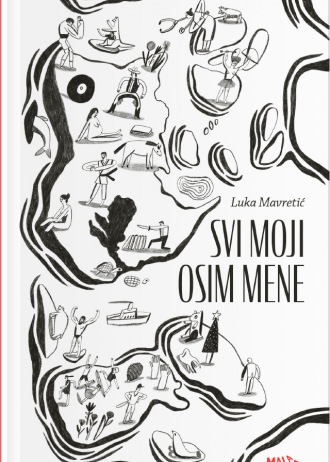
All My Loved Ones But Me
13,00 €Luka Mavretić’s third poetry collection “All My Loved Ones But Me” is a series of “inner journeys” – journeys that the author announces in the first poems of this very thoughtfully built piece. The young poet balances between lyrical verses and prosaic sentences, he strives towards a refined simplicity and manages to create a conversational tone, which is an important building block of his poetical world. An abundance of motives and a diary-like directness make this book an interesting and fresh collection. Even though he uses interpunction which creates finished, harmonical sentences and gives the text a prosaic tone, his verses remain verses, lines with a natural and easy flow. Despite a breezy atmosphere that the author creates, this is a collection of well thought-through and refined texts – Luka Mavretić is a poet who, in an alchemy of words, transforms chosen glimpses of reality into memorable and luminous images.

#openwindow
15,00 €This collection of short texts enitled “#openwindow” is an outstanding example of how high-quality and original literature can be created on social media. For a year, author Aida Bagić wrote morning notes while looking out the window in her bedroom and published them on social media, with accompanying photographs. This project was called #openwindow, and resulted in a variety of texts – prose and poetry fragments, comments on daily events, notes on dreams and memories, wordplay and sketches of fairy tales. Often meditative, sometimes factual or playful, they reveal that the author is a skilled writer with an experience in writing poetry. Collected in this book, these notes show how an everyday object can stimulate our imagination, reflection, and introspection. Created in front of a window that opens onto external landscapes, they outline the author’s world of thought and emotion as a unique and interesting inner landscape. These texts are also an invitation to readers to think about their own everyday life, about ways in which they could rethink it so that it is not only more bearable, but also a source of genuine curiosity, sometimes even joy.

Notes from the Source, Questions for Later
21,00 €An architect with previous experience as author, in his new book conceived as a sort of travel journal, Tomislav Pavelić reflects on the (co)relationships between man and nature, space and place, history and the present. At the end of his often erudite considerations, he asks questions that serve as both the starting point and the destination of these journeys. Without offering hasty answers, he invites us to approach universal problems with an open mind, illustrated in concrete examples of the regions visited, which form the colorful and dynamic decor of this book: places like Armenia, Sicily, Andalusia, Albania etc. All of these locations and cultures can teach us something about the past, but at the same time they allow us a clearer view into the murky and uncertain future of our civilization.
