-
 Jezikova juha / Tongue Soup
16,00 € × 1
Jezikova juha / Tongue Soup
16,00 € × 1
Ukupno : 16,00 €

 Jezikova juha / Tongue Soup
16,00 € × 1
Jezikova juha / Tongue Soup
16,00 € × 1 Ukupno : 16,00 €
17,00 €
Don’t let the title fool you – in these witty micro-stories the end of the world is happening on an (almost) everyday level and “other trifles” may have an unexpected depth. Miniatures by Sanja Lovrenčić, organized in eight “chapters”, seemingly adapted to the short attention span of a modern reader, take into account things like morning-garbage-squads, polar bear wisdom, exodus of delivery people, time-stay-machines, mythical journeys and metaphorical animals. Sometimes entertaining, sometimes meditative, the author’s voice stays firm in defending the art of painting/playing with words and especially vocal against false/alternative literature that (allegedly) paints reality, media, and politics.
Format: 13×20
ISBN: 978-953-8313-69-1
Pages: 170
Softcover
Shortlisted for the Predrag Matvejević Award 2021, longlisted for the Fric Award 2019 Sanja Lovrenčić’s books draw into her net a reader who is ready for adventure, for whom reading is not merely following a linear plot and a pastime, but recognition and acceptance of a game that, when joined, becomes infinitely meaningful, subtle and even fun. Her new novel, entitled Cabinet for Sentimental Trivial Literature, in which is its set, but which is also an indicative determinant of what will be told, is certainly one of the “more readable” of her novels, i.e. one in which there are no traps for readers, unless they themselves want to fall into them. Also, as is often the case with this author, its structure is built somewhat conceptually, by changing the epistolary form, which makes up the main flow of narration, with inserted stories that form a rounded and meaningful whole it. There has been a crisis in the Cabinet, which is a kind of small, private and non-profit museum that houses the legacy of “sentimental and trivial literature”. The curator, who writes letters to the late founder Rosa, realizes that not only does the Cabinet need a “cash injection”, but also a new guardian to replace him. Since this is not just an ordinary job but also has a specific emotional and, of course, sentimental value, neither is easy to perform, and a job advertisement that includes one of the key sentences of the novel: “Your story is more important to us than your qualifications”, will further complicate matters. (…) Ten candidates apply to the ad that had inadvertently implied that candidates should also be writers, and they bring with them stories about their professional and private lives, sometimes completely bizarre, but also stories that make up an integral part of the novel. While the curator, who is becoming more and more desperate and sceptical, fills letters to Rosa with fragments from his own and the Cabinet’s everyday life, as well as those concerning the past, origin and meaning of her and his museum, an unusual and “soft” legacy that seems to have been run-over by a time of different imperatives and priorities, the candidates succeed one another before him, with their experiences, but above all with the stories they enclose, enabling the novel to emerge from the closed space of the Cabinet into the outside, towards modernity and its peculiarities and problems. This “opening” – placed in stories within the story – subtly positions the novel towards recent reality, because it indirectly deals with the themes of art and artistic activism, social responsibility, commercialization and the entry of capital into unprofitable spheres of human activity, feminism. science and technology, but also love, which is one of the shared motives and concerns both interpersonal relationships and the preservation of some past values. (Jagna Pogačnik)
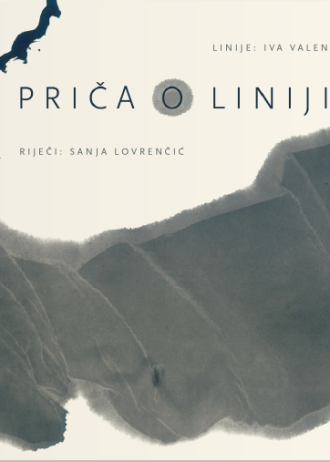
In the land of lines, a new one is born — as a dot. And immediately, it begins to move, for without movement, there is no line. As with any beginning, questions arise: Where to? Which way? How? There are many possibilities to explore, many examples to follow — or perhaps not? The young line will move this way and that before discovering its own rhythm, unfolding in space, and finally declaring: THIS IS ME!
Iva Valentić learned about lines in both the West and the East, studying at art academies in Venice and Beijing. The brushstroke on paper — ever-changing, diverse, surprising, and alive — is her primary means of artistic expression. Sanja Lovrenčić has added a few words to Iva’s visual story of the line, acting like signposts along the way. Together, they have created an original picture book—intended for all generations — a highly subtle book about learning, growth, exploration, and freedom.
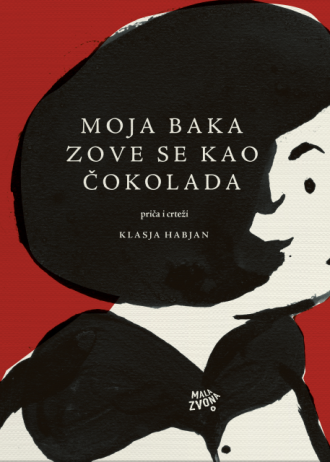
The graphic novel My Grandma’s Name Is Like Chocolate is a gentle, brave, and subtly layered book about memory,loss, and intimacy. By weaving together fragments of conversations, personal notes in prose and verse with expressive black-and-white illustrations, the author writes an intimate biography of her grandmother: a war orphan, an adopted girl, an adult woman, a television journalist and mother, and finally an old woman living in a nursing home, slowly sinking into dementia. But the grandmother is not the only character in this story. Klasja Habjan also speaks about her own experience, about the entire spectrum of feelings she faces when observing her grandmother. Her art is a kind of response to the anxiety caused by the inevitability of loss, but above all, it is a silent act of presence – an attempt to record the story of a life and of a relationship, with care and love.
This artist’s book took shape during Klasja’s residence at the Maison des auteurs in Angoulême, France.
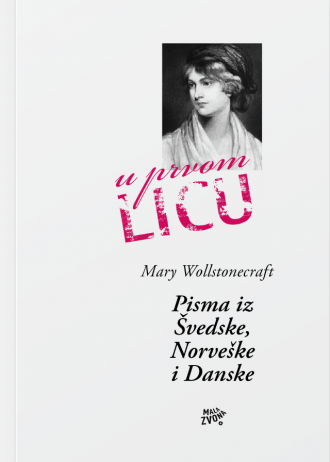
Famous letters by Mary Wollstonecraft for the first time in Croatian translation.